China Best Spray Painting 3D Printed Parts Supplier?
Choosing a supplier for Spray Painting 3d Printed Parts involves more than comparing prices. The final finish depends on print material, surface preparation, paint compatibility, and careful application. Small details matter. A rough layer line can remain visible beneath a glossy coat, while an unmasked screw hole may affect assembly. A capable supplier should explain how parts are cleaned, primed, painted, and inspected. They should also ask about color references, gloss level, texture, and the part’s intended use.
When comparing suppliers in China, look for clear process information and practical evidence, such as sample photos or finish samples made on the same material. Ask how the supplier manages color consistency across a batch and handles defects like dust, runs, or uneven coverage. Reliable communication matters, too. Written specifications and agreed inspection criteria help reduce avoidable surprises. Still, photographs cannot show every surface defect, and even careful painting may not produce identical results on every geometry. That is worth discussing before production.
This guide explores what to assess when selecting a spray-painting partner, from equipment and operator experience to quality checks and lead times. It also considers how to request a useful sample and compare quotes without focusing on price alone. No supplier is right for every project. A careful review of your part, finish expectations, and production volume can lead to a more informed choice—and fewer disappointments when the finished parts arrive.
What Spray Painting Adds to 3D Printed Parts
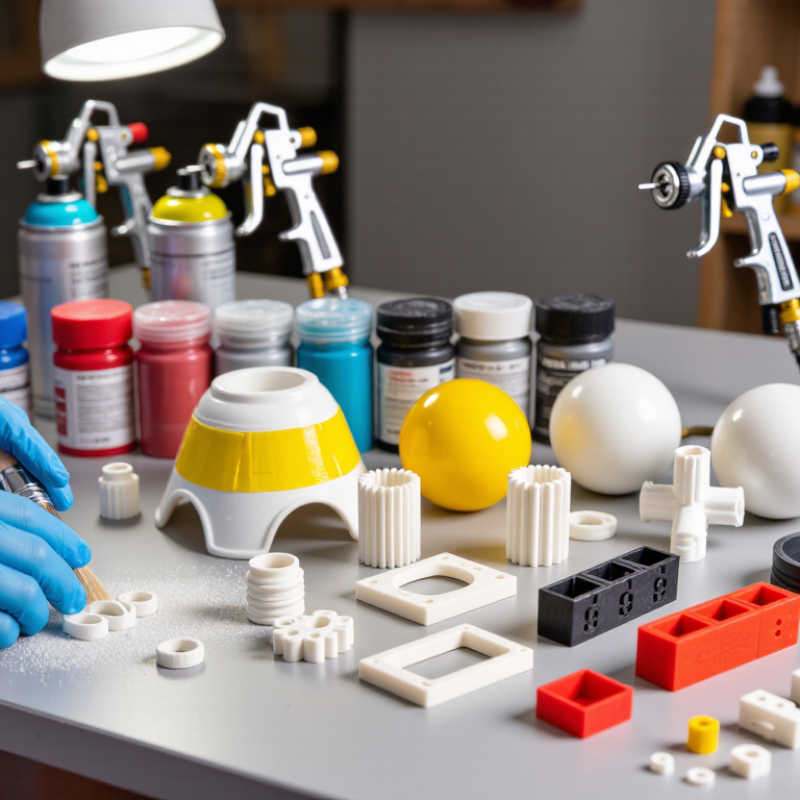
Spray painting adds more than color to a 3D printed part. It can soften the visibility of layer lines, create a consistent finish, and help prototypes look closer to their intended production appearance. On a small enclosure, for example, a fine, even coat can hide minor surface variation around corners and screw bosses. It cannot correct poor geometry or make a weak part stronger. That distinction matters. The Wohlers Report 2024 valued the global additive manufacturing industry at $20.035 billion in 2023, up 11.1% from 2022. This growth reflects wider use of printed parts, but does not mean every part needs paint.
The result depends heavily on preparation. Remove loose dust, smooth rough areas carefully, and choose a primer compatible with the print material. Mask mating faces, threads, and snap-fit edges; even a thin coating can affect assembly. Apply light passes rather than one wet coat, and let each layer dry as directed. Test the process on a sample from the same print batch. Small details matter.
Paint also has limits. It may chip at sharp edges, and thick coatings can blur fine features. In practice, I would inspect the part under angled light before spraying; missed ridges become obvious afterward. A sample test is not glamorous, but skipping it can waste a finished print.
How the Spray-Painting Process Works
Spray painting a 3D-printed part starts with inspection. Check for loose strings, visible layer lines, and small gaps around seams. Sand rough areas with fine abrasive paper, then remove dust with a clean, lint-free cloth. The surface must be dry. Even a little sanding dust can show through the finish.
Mask holes, threads, and contact surfaces before applying a compatible primer. Test the primer and paint on a spare print made from the same material; plastics can react differently. Hold the spray can or gun at a steady distance, usually about 20–30 centimeters, and move across the part in smooth passes. Start each pass just beyond an edge. Thin coats work. Let each coat flash off according to its product instructions before adding another. Heavy coverage can run or hide fine details.
Tips: Support the part on a stand so you can reach its edges without touching wet paint. Rotate it between passes, and inspect under angled light. Allow full curing before assembly. A small run may still happen; sand it back and respray rather than piling on paint.
Which 3D Printing Materials Can Be Spray Painted
Which 3D Printing Materials Can Be Spray Painted
Most common 3D-printed plastics can be spray painted, but surface preparation determines whether paint stays put. PLA and ABS usually accept paint after light sanding and a compatible plastic primer. ASA behaves similarly outdoors, though paint makers’ instructions still matter. PETG is less forgiving: its smooth surface can cause weak adhesion, so test a primer on a hidden area. Nylon is harder still because it absorbs moisture and resists many coatings. Fully cured resin prints often take paint well, but wash and cure them according to the resin supplier’s guidance. Test a spare piece.
Material choice is growing alongside the industry. Wohlers Report 2024 estimates that additive manufacturing revenue reached $20.035 billion in 2023, up 9.1 percent from 2022. That figure measures industry revenue, not paint performance; a printed part’s finish still depends on its exact polymer, surface texture, and print settings. In practice, clean off dust, let the part dry, sand visible layer lines, and apply thin coats from a consistent distance. Thick coats can pool in corners and hide fine details. I would not promise a flawless finish from one universal primer. A small test patch can reveal peeling, tackiness, or color changes before the whole part is coated.
How to Evaluate Spray-Painting Suppliers in China
When evaluating spray-painting suppliers in China, ask how they control surface preparation, coating thickness, color, and curing. These steps matter because printed parts can vary in texture and porosity. Request samples made from your actual material, not only a smooth display piece.
Market figures show why supplier checks deserve care. Grand View Research estimated the global 3D-printing market at US$20.37 billion in 2023, while Wohlers Report 2024 put additive-manufacturing revenue at US$21.9 billion. Their scopes differ, so the figures are not directly comparable. Neither measures paint quality. Samples can mislead. Ask for documented inspection results: ISO 2409 adhesion testing, ISO 2813 gloss readings, and color measurements against an agreed reference. Check whether the supplier records results by batch.
A useful audit follows a part from cleaning to final packing. Look for dust control, masking around holes, and consistent paint buildup on edges. Ask how rejected parts are logged and whether rework changes color or gloss. Then run a small pilot batch before approving volume production. A perfect sample proves little if the next batch shifts. I would also clarify who pays for failed batches; that detail is easy to overlook, and it can expose a weak process.
What to Check Before Choosing a Supplier for Your Project
China Best Spray Painting 3D Printed Parts Supplier?
What to Check Before Choosing a Supplier for Your Project
A smooth finish begins before the paint booth. Ask how the supplier removes powder, sands layer lines, and masks holes or threads. Request details for your exact material, since plastics and resins can react differently to primers and solvents. Wohlers Associates reported that the global additive manufacturing industry reached $20.0 billion in 2023, growing 11.1% year over year. That expansion means more options, not automatically more consistent finishing. Looks can mislead.
Check how the coating affects dimensions, adhesion, and color across a batch. Ask for a sample made with the same print material, surface preparation, and paint system as your parts. For adhesion, ASTM D3359 describes a cross-cut tape test, though the supplier should confirm its suitability for your part and coating. Also request measurements before and after painting, especially around tight fits. A glossy sample alone proves little.
Review documented process controls, inspection records, and capacity for your order size. Ask how defects are handled and whether the supplier records paint type, cure conditions, and batch results. Compare quotations for preparation, masking, rework, and packaging—not just the spray price. One detail is easy to overlook: a supplier may meet the sample color while missing consistency across a larger run. Request acceptance criteria in writing before production begins.