
Choosing among Bronzing Machine Manufacturers is not a brochure exercise. It is a production decision, shaped by foil consistency, registration accuracy, machine uptime, and the supplier’s ability to support operators after installation. A bright sample matters. So does a stable run of several thousand sheets.
Market context helps, but it needs careful reading. Smithers’ report The Future of Global Printing to 2028 valued worldwide print revenues at about $818.5 billion in 2022 and forecast growth to roughly $846 billion by 2027. This broad estimate covers printing, not bronzing equipment alone. Still, it points to continued demand for finishing that adds visual impact and perceived value. Treat it as context, not proof that any particular machine will pay for itself.
Quality-management expert W. Edwards Deming is widely credited with the reminder, “Quality is everyone’s responsibility.” That principle applies to both the machine builder and the print team using it. Ask manufacturers for measurable evidence: sample results on your stock, foil waste rates, changeover time, service response, and references from comparable plants. Then inspect the details. Does the feeder handle your sheet size? Can operators adjust pressure without guesswork? A polished demonstration may hide production limits. That is worth questioning. The best choice is usually the manufacturer that answers difficult questions clearly, documents its claims, and lets your own materials prove the result.
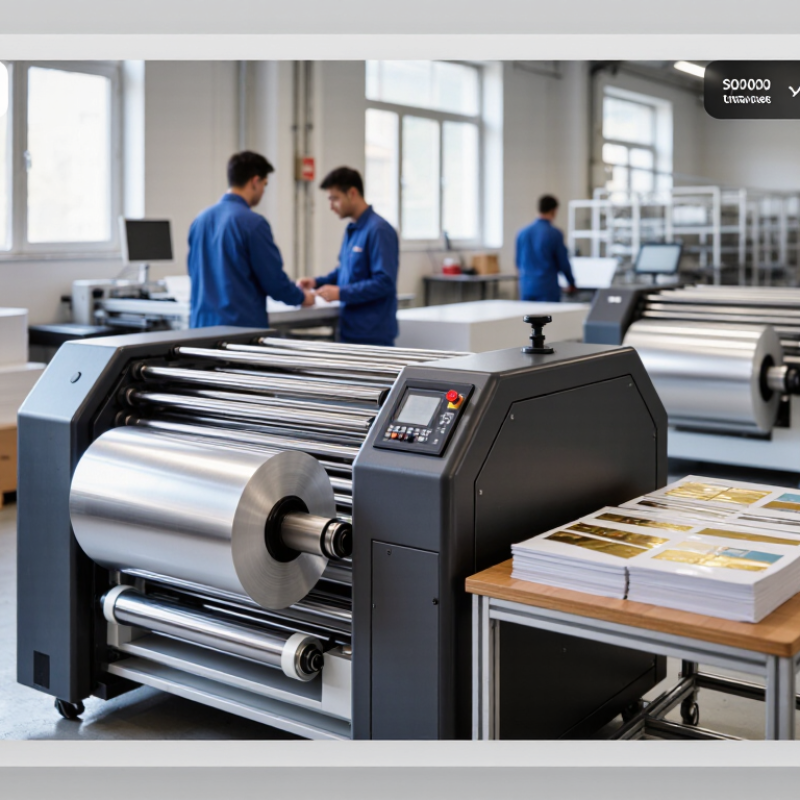
Before comparing Bronzing Machine manufacturers, define the work the machine must perform. List your substrates, such as coated paper, board, or synthetic sheets, and record their thickness and dimensions. Note the largest image area and the smallest details that must register accurately. Small lettering can expose alignment problems quickly. Estimate daily output using actual job volumes, not an optimistic peak figure. Include expected changeover time between designs and foil types.
Clarify which features are essential: manual or automatic feeding, adjustable pressure, temperature control, and repeatable registration. Check available floor space, power supply, ventilation, and operator experience before requesting a quotation. These details help manufacturers recommend suitable configurations rather than oversized equipment. Ask how performance is tested, and provide representative materials and artwork for a sample run. Measure registration, finish consistency, waste, and cycle time. Estimates change. Leave room for future jobs, but avoid paying for capacity you cannot use. I would revisit the specification after reviewing several real production orders; early estimates are often less accurate than they seem. Keep those assumptions visible when discussing technical limits, maintenance access, training, and spare parts.
A capable bronzing machine manufacturer should explain how its equipment performs, not rely on glossy claims. Ask for documented test results covering temperature stability, cycle consistency, and output quality. For example, a machine should maintain an even finish across a full production tray, not just in a sample photo. Check whether the manufacturer has relevant engineering experience and can provide clear specifications, operating instructions, and maintenance guidance. Vague answers matter.
Review quality controls before comparing prices. Ask how components are inspected, how faults are recorded, and whether each unit is tested before shipment. Request references from businesses with similar production needs, then ask about downtime and service response times. A detailed warranty is useful, but it cannot replace accessible technical support. Also check whether spare parts and trained service staff are available. A low purchase price may become costly if routine repairs take weeks. I would still verify claims independently; a polished document is not proof of reliable performance.
Tips: Request a live demonstration using your materials. Ask to see inspection records and a sample maintenance schedule. Compare the actual figures, not just promises. If a specification is unclear, pause and ask for it in writing.
When comparing bronzing machine manufacturers, assess the machine against your actual material, finish, and production volume. Ask for a live demonstration using a sample piece similar to your own. Watch how evenly the machine applies or develops the finish, and check for streaks, uneven edges, or excessive heat. Ask for documented details on operating range, controls, maintenance intervals, and replacement parts. A polished brochure is not proof of consistent results.
Customization should solve a clear production problem, not simply add features. Discuss adjustable speed, working width, temperature control, loading method, and integration with existing equipment. Request drawings or a written specification before approving changes, including tolerances and acceptance criteria. A common mistake is focusing on the purchase price while overlooking setup time and service access. I would still compare the same test conditions across suppliers; otherwise, the results can mislead.
Tips: Bring sample materials, record settings, and request a repeatable test. Ask what happens if a custom component needs repair. Keep it practical. Extra automation may sound appealing, but it can add complexity your team does not need.
| Evaluation Dimension | Suggested Weight | What to Check | Evidence to Request | Practical Acceptance Check |
|---|---|---|---|---|
| Foil-stamping quality | 20% | Transfer coverage, edge definition, adhesion, registration, and consistency across the intended substrate and foil. | Stamped samples made with the buyer’s artwork, substrate, and specified foil; documented test conditions. | Inspect multiple samples for incomplete transfer, blurred edges, unwanted marks, and variation. Agree on measurable defect limits before ordering. |
| Machine construction and safety | 15% | Frame rigidity, guarding, emergency stops, electrical protection, accessible service points, and documentation for applicable safety requirements. | Equipment drawings, safety documentation, component specifications, maintenance instructions, and a factory inspection opportunity. | Check that guards and emergency-stop functions operate correctly and that the machine is stable during a production-representative run. |
| Temperature control | 12% | Heating range, temperature stability, warm-up behavior, control zones, and suitability for the selected foil and substrate. | Controller specifications, temperature readings from a test run, and a sample produced at the proposed operating settings. | Confirm that the machine maintains the agreed process settings during a sustained test; record actual settings and results in the acceptance protocol. |
| Pressure and impression adjustment | 10% | Pressure adjustment method, impression uniformity, platen or roller alignment, and repeatability after setup changes. | Adjustment instructions, machine specifications, and test results across the working area. | Run a test layout with features in different positions and check for consistent transfer without excessive substrate deformation. |
| Production speed and repeatability | 10% | Rated cycle speed, realistic output for the buyer’s job, setup time, and consistency over repeated cycles. | Published model specifications and a timed demonstration using a comparable job, material, and operating mode. | Compare demonstrated output with the quoted production requirement; distinguish rated machine speed from finished, quality-approved output. |
| Format and material compatibility | 10% | Maximum and minimum workpiece dimensions, usable working area, material thickness, feeding method, and supported foil formats. | Technical drawings and a written compatibility confirmation for each intended substrate and job size. | Verify that the buyer’s largest and smallest planned jobs fit the machine’s working area and feeding arrangement. |
| Customization options | 10% | Available tooling, custom fixtures, feeding and delivery units, multiple heating zones, automation interfaces, and layout adaptations. | A configuration proposal showing included equipment, optional modules, interface requirements, and the effect of each option on delivery and price. | Request a written response for every required customization, including scope, technical limits, commissioning needs, and acceptance criteria. |
| Controls and changeover | 5% | Control clarity, recipe storage if available, setup access, changeover procedure, and operator training materials. | Control-system description, operator manual, training plan, and a demonstration of a representative job changeover. | Have an intended operator follow the documented setup procedure and identify any steps that require undocumented intervention. |
| Service, spare parts, and warranty | 5% | Warranty scope, service response process, spare-parts availability, maintenance intervals, and remote or on-site support options. | Written warranty terms, recommended spare-parts list, maintenance schedule, and support contact process. | Confirm exclusions, response expectations, shipping responsibilities, and the availability of critical replacement parts in writing. |
| Factory acceptance and documentation | 3% | Whether the manufacturer supports a documented factory acceptance test, shipment inspection, and installation handover. | Draft acceptance checklist, packing and installation requirements, electrical specifications, and commissioning plan. | Make final payment and shipment milestones conditional on agreed tests, records, and delivery documentation where contractually appropriate. |
| Suggested total evaluation weight | 100% | Suggested buyer scorecard weights, not industry certification criteria. Adapt the weighting and acceptance limits to the machine type, production volume, materials, and application. | ||
Verify Certifications, Service, and Customer Feedback
A certificate matters only when its scope covers the factory, process, and machine you are buying. Check the issuer, expiry date, and model details; ask for the original test report. ISO’s 2022 Survey recorded over 1.2 million valid ISO 9001 certificates worldwide. That scale shows how common certification is, not whether one supplier’s bronzing machine performs well. Request a live demonstration. Watch the foil feed, pressure consistency, and heating stability across repeated cycles. Small differences show up fast.
Service deserves equal scrutiny. Get written response times, spare-part lead times, warranty exclusions, and remote-support hours. Ask who handles a fault on a Friday afternoon. A polished brochure cannot answer that. One uncomfortable point: service promises are easy to make and harder to verify. Ask for references using the same machine model, and confirm how long they have operated it. BrightLocal’s 2024 consumer survey found that 75% of respondents regularly read online reviews. It is not an industrial-buyer survey, so treat reviews as clues, not proof. Look for specific comments about downtime, technician visits, and replacement parts. Generic praise tells you little. Check several sources, and ask the manufacturer to explain recurring complaints.
A practical evaluation framework: verify certifications, assess service capability, and review customer feedback.
The percentages are suggested buyer-defined weights, not industry survey results. Confirm that certificates are valid and cover the relevant products or facilities, clarify service and spare-parts commitments, and assess feedback across multiple independent sources.
Compare manufacturers using the same specifications, not just their headline prices. Ask each supplier to quote the same machine capacity, output rate, installation scope, and included accessories. A low purchase price may exclude setup, operator training, or essential parts. Small charges add up.
Build a three-year cost estimate. Include energy use, routine maintenance, consumables, replacement parts, and likely downtime. Request written warranty terms and typical service response times. Ask for maintenance schedules and parts lead times, then compare them with your team’s needs. A spreadsheet can still miss awkward details, so confirm assumptions directly.
Fit matters more than a feature list. Check that the machine suits your expected workload, available space, and operators’ experience. Request a live demonstration or a trial using materials similar to those in your process. Watch how adjustments are made and how easily staff can clean or service the equipment. Ask for performance records from comparable applications, while treating broad claims cautiously. The cheapest offer may be right for a small operation; a higher-cost option may be more practical when reliable support and steady output matter. Estimates are imperfect. Leave room for uncertainty.
880 W 9th Street
Upland, California 91786
884 W 9th Street
Upland, California 91786
886 W 9th Street
Upland, California 91786
884 W 9th Street
Upland, California 91786