
Choosing Steel Fabrication Materials is not just a matter of selecting the strongest grade. The right choice must suit the part, the fabrication process, and the conditions it will face. A structural beam in a dry interior has different needs from a tank exposed to moisture or chemicals. Cost matters, too, but the cheapest sheet can become expensive if it warps during welding or requires extra finishing.
Industry data shows why these decisions carry weight. World Steel Association’s World Steel in Figures 2024 reports that global crude steel production reached 1,892.2 million tonnes in 2023. The International Energy Agency’s Iron and Steel Technology Roadmap identifies steelmaking as responsible for about 7% of global carbon dioxide emissions. These figures do not dictate which material belongs in a project. They do show why durability, material efficiency, and responsible sourcing deserve attention alongside price. Useful comparisons begin with measurable properties: yield strength, corrosion resistance, thickness tolerance, and weldability. Then check the material specification and confirm that it fits the drawing and intended use. Small details matter. A poorly matched grade may crack at a weld, while an oversized specification can add needless weight and cost. There is no perfect choice in every workshop; handling, availability, and operator skill can change the outcome. This guide explains how to weigh those trade-offs and choose materials with clearer, more defensible reasoning.
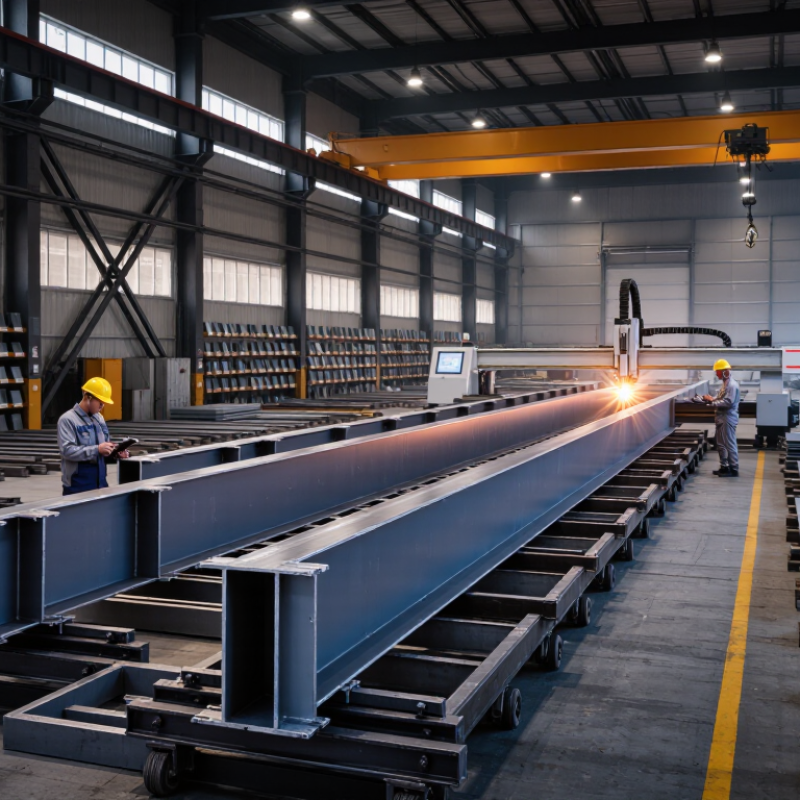
How to Choose the Best Steel Fabrication Materials
Define Project Requirements and Operating Conditions
Before comparing steel grades, define what the fabricated part must do. Record its dimensions, expected loads, movement, service life, and acceptable maintenance. A support frame carrying steady weight has different needs from a bracket exposed to repeated vibration. Small details matter.
Describe the operating environment, not just the room or site. Note temperature swings, moisture, salt, chemicals, abrasive dust, and contact with other materials. These conditions can affect corrosion, wear, and performance over time. Conditions change. If the part will be outdoors, specify whether rain can collect in seams or water can drain freely.
Then check how the steel will be made. Welding, bending, cutting, and machining can limit suitable choices, even when a grade looks right on paper. Share drawings, tolerances, and joining methods with the fabricator early. Ask how material thickness and forming may affect fit or distortion. A specification can still miss something; reviewing it against actual site conditions may reveal overlooked exposure or handling loads. That review is worth the extra time.
Steel grades differ in strength, weldability, corrosion resistance, and forming behavior. A familiar low-carbon steel grade is often easy to cut, bend, and weld, making it practical for brackets, frames, and general structural work. Its limits show outdoors: without a protective coating, moisture can lead to rust. Simple does not mean suitable everywhere.
High-strength, low-alloy steel can carry heavier loads with less material, but its higher strength may require adjustments to cutting, bending, and welding procedures. Stainless steel offers better corrosion resistance. Common austenitic grades such as 304 and 316 are used in damp or chemically exposed settings, though they generally cost more than carbon steel. Grade 316 is often considered where chloride exposure is a concern; the actual environment still matters.
Compare the material datasheet with the design requirements, including thickness, load, exposure, and fabrication method. Check the specified standard, since grade names and properties can vary between standards. A useful trade-off is easy to miss: a stronger sheet may reduce weight but increase fabrication demands. Details matter. I would not choose by strength alone; I might still overlook a coating, joint, or forming constraint unless it is checked early.
How to Choose the Best Steel Fabrication Materials
Material compatibility starts with the fabrication method, not a grade chart alone. A steel that bends cleanly may still be awkward to weld, drill, or finish. For a tight-radius bend, check the material’s thickness, ductility, and grain direction. Cracks can appear along the outside edge when the bend is too sharp. Fit matters.
Welding introduces different concerns. Compare the steel’s carbon content and thickness with the planned welding process, filler material, and heat input. Mismatched choices can cause distortion or a brittle heat-affected zone. For outdoor parts, consider whether the steel, welds, and protective coating will resist the same exposure. A coating that works on flat plate may leave corners or cut edges vulnerable.
Talk with the fabricator before locking in a specification. Share drawings, tolerances, finishing requirements, and any expected load or temperature changes. A small test coupon can reveal problems with a bend, weld, or coating before production begins. Test a sample. This step takes time, and it may feel excessive for a simple part. Still, material compatibility is rarely perfect on paper; real shop conditions can expose details the specification missed.
Compare representative minimum yield strengths, then consider how each material responds to your fabrication process.
A36 carbon steel is commonly welded and formed; 304 stainless steel is weldable but work-hardens during forming; 6061-T6 aluminum is lightweight and machinable, but welding can reduce strength in the heat-affected zone. Values shown are representative specified minimums in common product forms. Actual requirements vary by product standard, thickness, and condition; yield strength alone does not determine fabrication suitability.
Choosing steel fabrication materials means comparing service life, supply reliability, and installed cost—not just price per kilogram. Match the grade to loads, weldability, and exposure. A coastal handrail may need corrosion-resistant steel; a dry indoor bracket may not. World Steel Association’s World Steel in Figures 2025 reports 1,882.6 million tonnes of crude steel produced globally in 2024. That scale suggests broad production capacity, but it does not guarantee your required grade, thickness, or delivery date is available nearby. Check mill certificates and confirm lead times with suppliers.
Estimate total cost across purchasing, cutting, welding, finishing, transport, maintenance, and expected replacement. A cheaper plate can become costly if it needs extra coating or causes more fabrication waste. Compare quotes on the same grade and dimensions. For durability, review the actual environment and inspect relevant specifications; a generic “steel” description is not enough. I have seen estimates miss handling and finishing costs. That assumption can fail.
Tips: Ask for current stock status, not just a catalog listing. Compare delivered prices, request material traceability documents, and include likely maintenance costs. Keep a small contingency; real projects rarely match every estimate.
Verify Standards and Select the Best-Fit Material
Choose material against the project specification, not just a familiar grade name. For structural work, confirm the required standard and edition, then check the grade, dimensions, and mechanical properties on the mill test certificate. ASTM A36 and A572 cover different strength requirements; they are not interchangeable by default. AISC 360-22 provides structural steel design requirements, but the project documents determine which provisions apply. Check heat numbers and match them to the supplied pieces. Small details matter.
Exposure matters just as much as strength. A NACE International IMPACT study estimated global corrosion costs at US$2.5 trillion, or about 3.4% of global GDP, based on 2013 data. That figure is broad, not a project-specific forecast. Still, it shows why wet environments, de-icing salts, and coating maintenance belong in material selection. I would also question a low-cost choice if its required protection is difficult to inspect or renew.
Tips: Compare the certificate with the purchase specification before cutting. Confirm grade, thickness, and traceability. Ask whether the selected coating suits the actual exposure. If a substitution seems equivalent, have the responsible engineer verify it; I have seen “close enough” assumptions create avoidable rework.
| Material and Standard | Common Product Forms | Specified Minimum Mechanical Properties | Good Fit For | Fabrication and Service Considerations | What to Verify Before Purchase |
|---|---|---|---|---|---|
| Carbon structural steel ASTM A36 | Plate, shapes, bars, and other structural products covered by the specification | For many common thicknesses: minimum yield strength 36 ksi (248 MPa); tensile strength 58–80 ksi (400–552 MPa). Requirements vary by product form and thickness. | General-purpose brackets, frames, base plates, and non-specialized structural fabrication. | Widely used for routine welding and machining. Provide a suitable coating or other corrosion protection where the environment requires it. | Confirm the applicable product form, thickness-specific requirements, grade designation, and material test report (MTR). |
| High-strength low-alloy structural steel ASTM A572 Grade 50 | Plate, shapes, and other product forms listed in the specification | For covered products and thicknesses: minimum yield strength 50 ksi (345 MPa) and minimum tensile strength 65 ksi (448 MPa). Check specification limits for the ordered form and thickness. | Structural members and fabricated assemblies where higher strength may allow a more efficient design than a lower-strength grade. | Welding procedures should be selected for the material thickness, joint design, restraint, and service conditions; higher strength alone does not establish weldability or suitability. | Verify that the exact product form is covered, the ordered grade is stated, and the MTR reports properties for the supplied heat and dimensions. |
| Structural steel for building framing ASTM A992 | Hot-rolled structural shapes | Minimum yield strength 50 ksi (345 MPa); minimum tensile strength 65 ksi (448 MPa), subject to the specification and product requirements. | Building-frame beams and columns where A992 is specified by the design documents. | Intended for structural shapes, not as a general substitute for plate or tubing specifications. Match the section and grade to the approved design. | Check the shape designation, grade, applicable ASTM edition, MTR, and any project-specific ordering or inspection requirements. |
| Cold-formed structural tubing ASTM A500 Grade C | Round, square, and rectangular structural tubing | Minimum yield strength is 46 ksi (317 MPa) for round tubing and 50 ksi (345 MPa) for square or rectangular tubing; minimum tensile strength is 62 ksi (427 MPa). | Hollow-section frames, columns, supports, and other structural assemblies designed for tubing. | Section geometry, wall thickness, corner radii, and fabrication details affect fit-up and design. Use appropriate procedures for cutting, forming, and welding. | Verify shape, outside dimensions, wall thickness, grade, manufacturing requirements, and the MTR. Confirm that the specified grade applies to the tubing shape ordered. |
| Atmospheric corrosion-resistant structural steel ASTM A588 | Plate, shapes, and other covered structural products | For some common Grade A thicknesses: minimum yield strength 50 ksi (345 MPa) and minimum tensile strength 70 ksi (483 MPa). Requirements depend on grade, product form, and thickness. | Outdoor structures designed to develop a protective patina under suitable exposure conditions. | Weathering performance depends on cycles of wetting and drying. It may be unsuitable in marine or chloride-rich settings, persistently wet locations, or details that trap water; assess exposure and detailing. | Confirm grade, product form, thickness-specific properties, chemistry requirements, and environmental suitability with the project specification. |
| Stainless steel plate, sheet, and strip ASTM A240 Type 304 (UNS S30400) | Plate, sheet, and strip | Typical specification minimums: 0.2% offset yield strength 30 ksi (207 MPa) and tensile strength 75 ksi (517 MPa). Check the applicable product requirements. | Fabricated components needing general-purpose corrosion resistance in many indoor and moderate service environments. | Corrosion resistance depends on the environment and surface condition. Use dedicated stainless-compatible tools and control contamination from carbon steel during fabrication. | Verify type, product form, thickness, finish, MTR, and any project-required corrosion, cleanliness, or testing criteria. |
| Stainless steel plate, sheet, and strip ASTM A240 Type 316 (UNS S31600) | Plate, sheet, and strip | Typical specification minimums: 0.2% offset yield strength 30 ksi (207 MPa) and tensile strength 75 ksi (517 MPa). Check the applicable product requirements. | Components requiring improved resistance to many chloride-containing or chemical environments compared with Type 304, subject to exposure conditions. | Type 316 is not immune to corrosion; concentration, temperature, crevices, and exposure duration matter. Confirm suitability for the actual service environment. | Verify type, product form, thickness, finish, MTR, and service-specific corrosion requirements before approving the material. |
Selection and verification note: Mechanical-property figures are specification minimums or stated ranges for common cases, not design allowables. Requirements can vary by ASTM edition, grade, product form, thickness, and delivery condition. Check the project documents and current applicable standard, and review the MTR for grade, heat number, chemistry, mechanical test results, and traceability before fabrication.
880 W 9th Street
Upland, California 91786
884 W 9th Street
Upland, California 91786
886 W 9th Street
Upland, California 91786
884 W 9th Street
Upland, California 91786