
Choosing the right Hardox Liner starts with the material moving across it, not with a hardness number alone. Fine, dry ore can steadily abrade a chute floor. Large rocks striking a dump body create a different problem: impact damage, cracked welds, and local deformation. Moisture, sliding speed, liner thickness, and mounting design also affect service life. The details matter.
SSAB’s Hardox 450 product data sheet lists a nominal hardness range of 425–475 HBW; Hardox 500 is listed at 470–530 HBW. These figures are measured using the Brinell method described in ISO 6506-1. They help compare grades, but they do not predict service life by themselves. A harder plate may resist abrasion well, yet the application may demand more toughness or easier fabrication. That trade-off deserves a close look.
This guide will connect operating conditions with liner grade, thickness, and practical installation choices. It will also consider how to inspect wear patterns, because polished grooves and deep impact marks tell different stories. A small mismatch can become expensive. I cannot verify a named expert quotation from the material provided, so I will not invent one. Reliable selection should rest on published product data, measured site conditions, and advice from a qualified wear-plate specialist.
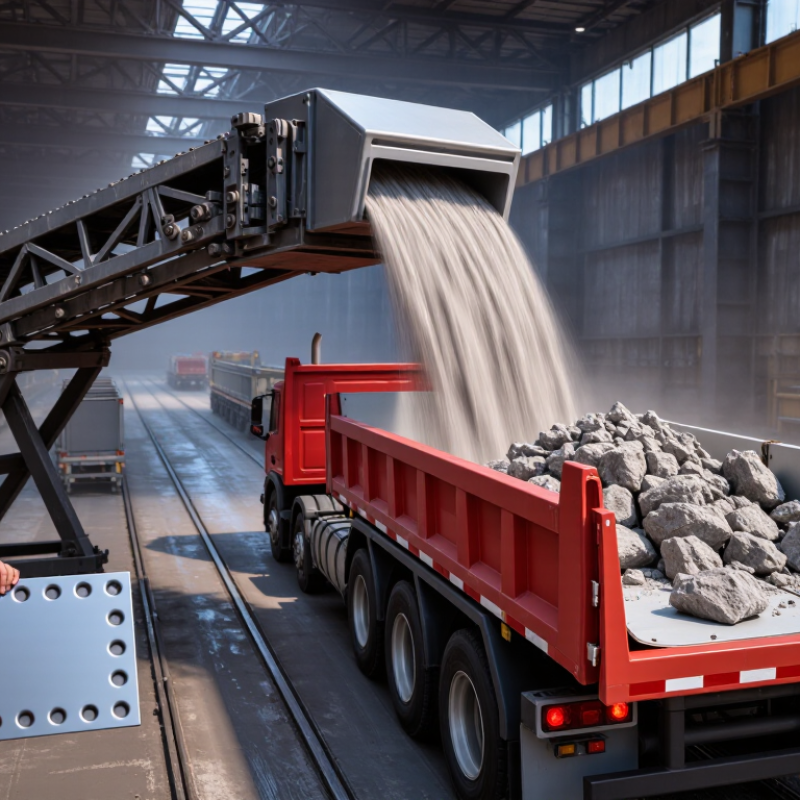
Choosing a Hardox liner starts with the job, not a thickness chart. Record impact height, contact angle, and how often the load strikes the surface. Large, sharp rock dropping from a loader can cause different damage than fine, steady abrasion. Temperature, moisture, and corrosive material also affect wear patterns. Observe the chute during a full shift, when safe, and note where material piles up or changes direction. Those points often reveal more than one wear measurement.
Tips: Track tonnes moved and liner thickness at fixed locations. Photograph the same spots weekly; small changes are easy to miss. Keep it repeatable.
Material flow matters as much as impact. A liner that is too smooth may let wet fines cling, while a poor transition can create turbulence and concentrated wear. Check whether the stream slides, bounces, or presses against one side. Match the plate grade and thickness to the dominant wear mode, while checking weight, mounting space, and replacement access. More steel is not always better. An early estimate can still be wrong; verify it against actual wear after installation and adjust the next specification.
Assess operating conditions and material flow before selecting a wear plate hardness class.
The chart shows common nominal hardness classes in Brinell hardness (HBW), not measured wear rates. Higher hardness can help resist sliding abrasion, while coarse feed and high impact may call for a tougher, lower-hardness plate. Treat these pairings as a starting point and confirm them against impact severity, particle size, flow speed, plate thickness, and site wear data.
A suitable abrasion-resistant steel liner begins with the wear mechanism, not a hardness figure. Angular rock sliding across a chute causes cutting and scratching; rounded, fine material tends to polish the surface. Large lumps dropped from height create impact damage, often near seams, corners, and unsupported plate edges. Wet feed can change the pattern again. Look for grooves, dents, cracked welds, and uneven thinning on the existing liner.
The U.S. Geological Survey’s Mineral Commodity Summaries 2024 estimates U.S. crushed-stone output at about 1.5 billion short tons in 2023. High material throughput makes abrasion a serious operating concern, but tonnage alone cannot predict liner life. ASTM G65 provides a controlled dry-sand/rubber-wheel abrasion test; it does not reproduce every wet chute or heavy impact. Test results need operating context.
For a real selection, record feed size, drop height, impact angle, and whether material slides or strikes directly. Check plate thickness at several points, not only where wear looks worst. If dents dominate, compare toughness and support design alongside abrasion resistance. If long grooves dominate, prioritize abrasion performance. I would not trust a single hardness number to settle the choice; field conditions are messier than a test rig.
Choosing a wear-resistant steel grade starts with the material hitting the liner. Sharp rock, rounded gravel, and sliding fines cause different wear patterns. Note impact, abrasion, and operating temperature before comparing grades. A harder grade may resist abrasion, while a tougher one can better tolerate repeated blows. There is no universal winner. Check the supplier’s technical data, including hardness range, impact properties, and any limits for forming or welding. If the feed changes seasonally, record that too; a single shift’s conditions may not tell the whole story.
Thickness should reflect wear rate, available clearance, and the weight your equipment can carry. Measure the current liner at several points, especially near inlets, corners, and discharge zones. Those spots often wear first. Compare the measurements with replacement history, not just the original drawing.
More thickness can extend service life, but it also adds weight and may reduce usable space. Measure the wear. A tidy calculation can still miss uneven loading or trapped material; honestly, that is easy to overlook.
When records are limited, trial a small, replaceable section and inspect it at planned intervals. Use the findings to adjust grade and thickness before specifying the full liner.
Before selecting a wear-resistant steel liner, map how the plate will be cut, formed, and joined in your workshop. Ask the fabricator to confirm the grade’s minimum bend radius, plate thickness, and approved cutting method using current technical data. Do not assume a familiar setting will work on a thicker plate. Small trials help. Check cut edges for roughness and heat tint, since either can affect bends or weld areas. If your measurements are estimates, record that uncertainty instead of treating it as a precise dimension.
Then check the installation path, not just the drawing. Measure access openings, lifting points, bolt spacing, and clearance around ribs, seams, and discharge lips. Allow for thermal movement and replacement fasteners where the design requires them, while keeping the liner supported against impact. Dry-fit each section before final welding or bolting. Confirm that overlaps shed material rather than trap it, and that tools can reach every fastener. One detail is easy to miss: wear changes the profile over time. Check fit when the liner is new and near its planned replacement limit. A second site measurement may feel inconvenient, but it can prevent costly trimming during installation.
A liner’s service life is easier to manage when inspections begin before visible damage appears. Record the installed thickness at fixed, marked points, then repeat measurements on a consistent schedule. Photograph the same areas under similar lighting. Small details matter: a polished patch near an impact zone may wear faster than a broad, evenly scuffed surface. Track operating hours and material processed alongside each reading. Otherwise, a change in feed size or moisture can make wear trends difficult to interpret.
Look for patterns, not just one thin spot. Compare measurements across the liner, and note cracks, loose fasteners, edge lifting, or exposed support steel. Replace a liner before it wears through or loses secure contact with its backing. There is no universal replacement interval; the right threshold depends on the equipment, material, and consequences of failure. Use inspection records to estimate remaining service life, but treat estimates as estimates. Measurements can vary, and inaccessible areas may hide damage. A practical plan includes clear inspection responsibilities, safe equipment isolation, and replacement parts available before the predicted changeout. Keep revising the plan when actual wear differs from expectations. That mismatch is useful evidence, not a reason to ignore the data.
880 W 9th Street
Upland, California 91786
884 W 9th Street
Upland, California 91786
886 W 9th Street
Upland, California 91786
884 W 9th Street
Upland, California 91786