
Choosing a Permanent Formwork Magnet can look like a small procurement decision. On a busy precast line, it affects setup time, panel alignment, and how reliably forms stay in place. A magnet that slips under vibration can leave a visible defect. One that is awkward to release can slow the next pour. Details matter.
The scale of construction helps explain why these choices deserve careful review. Oxford Economics and Global Construction Perspectives projected in their Global Construction 2030 report that worldwide construction output could reach $15.5 trillion by 2030, an increase of 85% from 2014. This is a broad industry forecast, not a magnet-market estimate. Still, it points to growing pressure for repeatable, efficient production. A single headline number cannot tell buyers which magnet fits their mould.
Look closely at the actual job. Check the form material, required holding force, concrete pressure, surface condition, and release method. Ask suppliers for test data under conditions resembling your production line. Then verify dimensions and operating instructions with the people who handle the equipment. Small checks help.
A named specialist’s quotation should be verified against its original source; none was provided for this introduction. Inventing one would weaken the reliability this guide should offer. Selection is not always tidy, either: a stronger magnet is not automatically the better choice if it complicates release or maintenance. This guide will compare the practical criteria, evidence, and trade-offs behind choosing a Permanent Formwork Magnet.
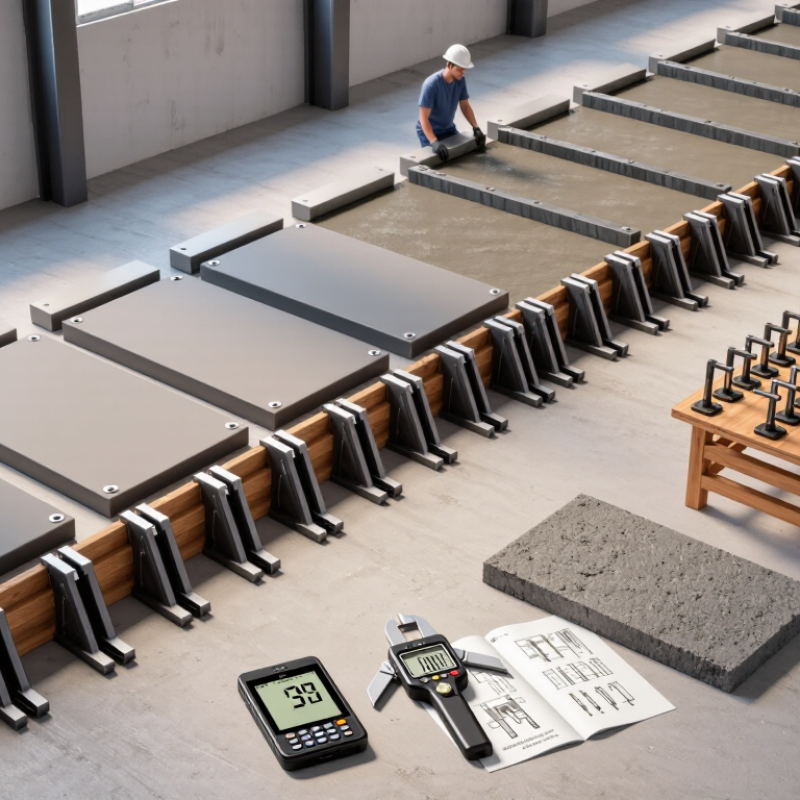
A permanent formwork magnet uses permanent magnets to create a holding force without electrical power. Its steel housing directs magnetic flux toward the contact face, where the magnet grips a steel formwork table. In many designs, a lever or button shifts the internal magnetic circuit between holding and release positions. The exact mechanism varies, so check how a unit operates before fitting it to a production line.
That matters.
A thin gap between the magnet and table can weaken the grip. Dried concrete, rust, or a bent contact surface may cause that gap. On a real setup, clean the steel and check that the magnet sits flat against it. Then consider how the load acts: a pull straight away from the table differs from sideways movement during vibration. A published holding-force figure may not reflect either condition perfectly.
Not magic. Test the magnet with the actual formwork profile and table, and follow the maker’s handling instructions. I would also inspect the release mechanism; a sticky lever can slow removal and invite rough prying.
One detail is easy to overlook: a magnet that holds well on a clean sample may behave differently on a worn shop-floor table. That deserves a practical check.
A permanent formwork magnet should match the formwork system, not just the advertised holding force. Record the profile shape, rail width, steel thickness, and available contact area. Note whether the form sits on a casting table, a steel bed, or another support. A dusty surface, uneven coating, or narrow rail can reduce contact. Small details matter.
Tips: Measure the form and support at several points. Check the magnet’s dimensions, rated holding force, and release method against the supplier’s technical data. Test the setup on the actual steel surface before production. Fit comes first.
Then define the project conditions. Consider form length, concrete pressure, vibration, placement speed, and how often the form will be moved. Check the planned magnet spacing against the formwork design and site procedures; do not assume one layout suits every pour.
Leave room for tools and safe access when releasing the magnets. If the table is warped or the form changes between pours, your original measurements may be wrong. That happens. Recheck the setup after changes, and ask a qualified engineer or magnet supplier to review unusual loads or profiles.
A permanent formwork magnet should be selected for the concrete load it must resist, not just its advertised holding force. Fresh concrete pushes against the form face, and pressure changes with pour height, placement speed, mix consistency, and vibration. A tall wall poured quickly can place much greater demand on the fixing system than a shallow, slow pour. Estimate the load on each magnet using the form dimensions and spacing, then allow for uneven loading and site conditions. Small details matter.
Tips: Keep magnets close to the areas where the form may lift or bow. Follow the formwork designer’s load limits. If the pour rate changes, review the setup again.
Check how the holding force was measured. A rating from a clean, thick steel plate may not reflect performance on a thin, painted, dusty, or slightly uneven surface. These conditions can reduce magnetic contact. Also consider the complete load path: the magnet, steel profile, form panel, and connections must all remain secure. A trial assembly can reveal movement before concrete is placed. It may feel overly cautious, but skipping that check is an easy mistake. Inspect contact surfaces and seating during installation; magnets do not compensate for poor alignment.
Measure the formwork magnet against the actual panel, not just a drawing. Check its length, width, height, and fixing points, then allow room for nearby ribs or welds. A few millimetres can affect seating. Small details matter. The magnet should sit flat, with its contact surface fully supported. If it rocks or leaves a visible gap, its holding force may be reduced.
Material choice matters too. A durable steel housing can tolerate repeated handling, while a suitable surface finish helps resist moisture and concrete residue. Inspect edges, seams, and the release mechanism for damage or buildup. Do not guess. Compare the magnet’s rated holding force with the formwork setup, but remember that ratings may assume clean, flat steel of a specific thickness. Dust, paint, rust, or a thin panel can change performance.
Compatibility is more than matching dimensions. Confirm that the magnet suits the formwork material, panel thickness, and production-table layout. Check that it can be placed and released without colliding with reinforcement or adjacent fixtures. Trial-fit one unit before ordering a full set. I would also recheck the fit after cleaning; residue can be easy to miss, and a magnet that worked yesterday may not seat properly today.
Choosing a permanent formwork magnet means checking more than its nominal holding force. The U.S. Bureau of Labor Statistics’ 2023 Census of Fatal Occupational Injuries recorded 1,075 fatal injuries in construction. That figure is not magnet-specific, but it underscores why temporary attachments deserve disciplined checks. OSHA’s 29 CFR 1926.703(a)(1) requires formwork to support anticipated loads. Compare the magnet’s rated force with the actual steel thickness, surface condition, and load direction. Concrete pressure and vibration may differ from catalog test conditions. Small gaps matter. Grease, rust, or a burr can weaken contact.
Before each pour, follow documented installation instructions and project-specific engineering limits. Engage the lock fully, then check that the magnet sits flush against the form. Keep hands clear of pinch points. A quick hand pull is not a proof test. Inspect the housing, welds, release mechanism, and pole faces for damage or corrosion. Remove concrete residue with a method that will not scratch contact surfaces, and store the magnet dry. Take damaged units out of service. Maintenance logs can reveal recurring problems, though paperwork cannot expose every hidden crack. A clean-looking setup can still invite overconfidence.
880 W 9th Street
Upland, California 91786
884 W 9th Street
Upland, California 91786
886 W 9th Street
Upland, California 91786
884 W 9th Street
Upland, California 91786