
Global buyers sourcing Cnc Metal Parts face a practical challenge: matching tight tolerances with dependable delivery, clear documentation, and repeatable quality. A polished website is not enough. Buyers need evidence, such as sample inspection reports, material certifications, and measured results from real production runs. A supplier’s ability to machine a small aluminum bracket consistently matters as much as its capacity for complex components.
Grand View Research estimated the global CNC machine market at USD 101.2 billion in 2023 and projected continued growth through 2030. This measures machine tools, not finished CNC metal parts, so it should not be mistaken for the parts market’s value. Still, it signals the scale of investment shaping modern manufacturing. Quality-management expert W. Edwards Deming captured a useful principle: “Quality comes not from inspection, but from improvement of the production process.” For buyers, that means looking beyond final checks to setup controls, tool management, and corrective-action practices. Details count.
This guide introduces top CNC metal parts suppliers for global buyers and the criteria that make comparisons meaningful. It considers machining capabilities, materials, quality systems, communication, and delivery performance. No supplier is ideal for every project. A low quote can hide risks, while an impressive machine list does not prove process control. The right partner is the one that can show how it will make your part, verify it, and respond when results fall short. That last question is easy to overlook.
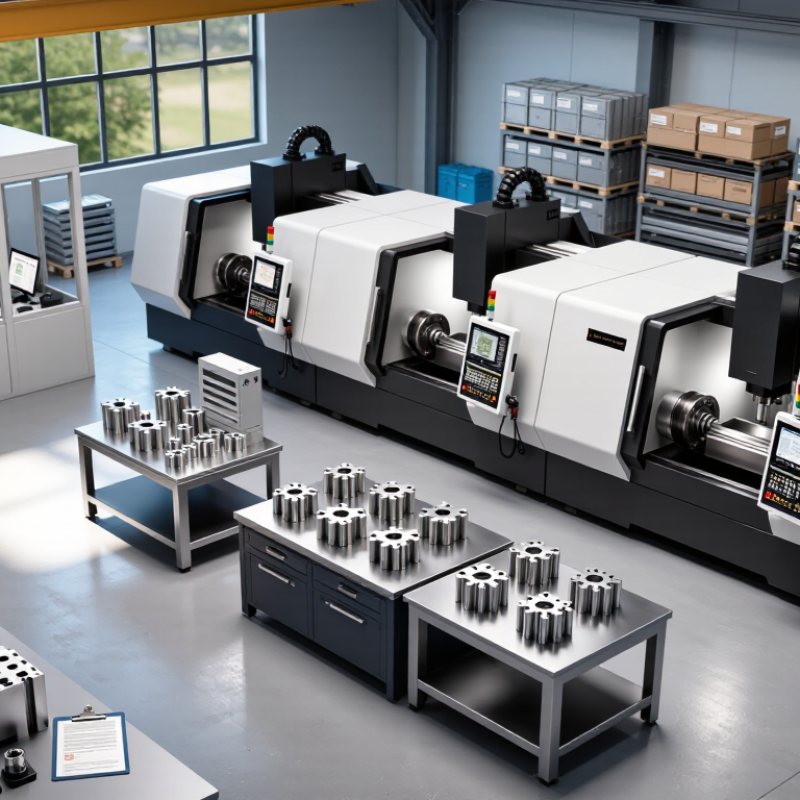
Understanding the Role of CNC Metal Parts Suppliers
CNC metal parts suppliers turn engineering drawings into repeatable components. Their work includes checking tolerances, selecting suitable stock, programming toolpaths, and inspecting finished parts. A supplier should flag a 0.02 mm tolerance that may drive cost or scrap, rather than machine it blindly. Small details matter. A burr inside a mounting hole can complicate assembly, even when the outer surface looks clean. Buyers should ask how the supplier handles first-article inspection, material traceability, and changes between production batches.
The supplier’s role is also becoming more data-aware. Deloitte and the Manufacturing Institute reported in their 2019 smart-factory study that 86% of surveyed manufacturing executives expected smart factory solutions to be a key driver of competitiveness within five years. That finding does not mean every shop needs advanced automation. It does highlight the value of reliable process data, consistent inspection records, and clear communication when orders change. For global buyers, these practices can help identify delays early and compare production runs across locations.
A capable partner can also advise on manufacturability: changing a sharp internal corner to a tool-friendly radius may reduce machining time. Still, supplier recommendations deserve review against the part’s function. I have seen “cost-saving” edits become awkward assembly compromises. Ask for evidence, not promises: sample inspection reports, stated tolerances, and a clear plan for packaging and delivery.
A capable CNC metal-parts supplier should show more than a certificate on a website. Ask for current certificates, the issuing body, expiration date, and covered facility. Check that the stated scope includes machining at the actual production site. A certificate for another location proves little. Small detail, big difference.
Request inspection records for a part similar to yours, including dimensional reports, material certificates, and calibration status for measuring tools. For a tight bore, ask how it is measured and how often the gauges are checked. Review first-article results and nonconformance handling, not just polished sample photos. Photos can hide variation. The answers should be specific and supported by records.
Capacity matters too. Ask which machines, shifts, and backup processes are available, then compare these claims with a small trial order. Confirm how revisions are controlled and whether lot numbers can be traced from raw stock to shipment. A video call from the shop floor may clarify things, though it cannot replace an audit. I would still leave room for doubt: one successful batch is not a stable process. Keep acceptance criteria written and specific.
Leading CNC Metal Parts Suppliers for Global Buyers
Leading CNC metal parts suppliers combine machining skill with dependable communication. Global buyers should compare more than quoted prices. Ask about the supplier’s experience with the required alloy, part geometry, and production volume. A sample housing, for example, can reveal tool marks, sharp edges, and fit issues before a larger order begins. Check how dimensions are inspected, and request clear measurement records for critical features. A capable supplier should explain realistic tolerances rather than promise perfection. That conversation matters.
Production readiness also depends on practical details. Confirm material traceability, packaging methods, and how design changes are handled. For international shipments, clarify lead times and which documents accompany the parts. Review drawings together, especially around threads, hole positions, and surface finishes. Even experienced suppliers can misunderstand a note. Small gaps create costly delays. A supplier may excel at precision prototypes but struggle with high-volume consistency, so match capabilities to the job.
Tips: Send a controlled drawing and identify critical dimensions. Request a first-article inspection report before approving full production. Compare sample parts with your own gauges when possible. Keep one point of contact for technical questions. No checklist removes every risk, and buyers should leave room for a second review.
A CNC quote should be compared line by line, not by unit price alone. Check material grade, machining hours, setup fees, finishing, inspection, and packaging. A low price can hide a longer lead time or exclude deburring. Quality claims matter more when supported by a clear inspection plan, such as dimensional reports for critical features. Ask how suppliers measure tight tolerances and handle parts that fall outside them. The answer may reveal more than a polished sales sheet.
Lead times need a realistic breakdown: drawing review, programming, machining, finishing, and dispatch. The World Bank’s 2023 Logistics Performance Index assesses factors including infrastructure, tracking, and timeliness across 139 economies. That makes the shipping route and handoff process worth checking, not just the supplier’s quoted production days. UNCTAD’s Review of Maritime Transport 2024 reports that shipping carries over 80% of world merchandise trade by volume. Sea freight can reduce costs, but transit variability may affect delivery schedules. Air freight is faster, though often much more expensive.
Tips: Request an itemized quote and a sample inspection report. Confirm whether lead time begins after order placement or drawing approval. Ask for the shipping method, estimated transit range, and packaging details. Small omissions matter. Even experienced buyers sometimes compare quotes with different assumptions; correct that before choosing.
Indicative fit scores across common sourcing considerations. Scores are qualitative planning estimates—not audited supplier performance data. Actual pricing, quality, lead times, and shipping depend on part specifications, order volume, inspection requirements, and destination.
Score scale: 1 = lower relative fit; 5 = higher relative fit. Request comparable quotes, inspection plans, production schedules, and delivered-cost estimates before selecting a supplier.
Top CNC Metal Parts Suppliers for Global Buyers?
Choosing a Supplier for Your Project’s Requirements
Start with the part, not the price. Define the alloy, annual volume, surface finish, critical dimensions, and acceptable tolerances. A supplier may quote quickly, yet assume a looser tolerance than your drawing requires. Ask for a sample inspection report and clarify how the supplier measures key features, such as a narrow bore or flat sealing face. Check whether the quoted lead time includes programming, tooling, finishing, and shipping.
Quality credentials can help with screening, but they are not proof of fit. The ISO Survey 2022 recorded 1,265,216 valid ISO 9001 certificates worldwide. That scale shows how common certification is; it does not confirm a shop’s CNC capacity or process control. Request evidence tied to your part: material traceability, first-article results, and inspection records for critical dimensions. Compare quotes line by line. Low unit cost can hide setup fees, minimum quantities, or costly rework. A polished capability sheet can still leave gaps.
Tips: Send the same drawing and inspection requirements to every candidate. Ask each supplier to flag dimensions that could raise cost or risk. For a complex part, start with a small pilot batch. It may feel slower, but it can expose unclear specifications before full production.
| Supplier Profile | Best Project Fit | Common Processes | Common Materials | Typical Tolerance Capability | Typical Order Size | Indicative Lead Time | Quality Evidence to Request | Key Sourcing Consideration |
|---|---|---|---|---|---|---|---|---|
| Prototype-focused machine shop | Design validation, one-off parts, and early engineering builds | 3-axis and 5-axis milling, CNC turning, drilling | Aluminum, stainless steel, brass, engineering plastics | About ±0.05 mm for many machined features; tighter tolerances should be specified and confirmed | 1–50 pieces | Approximately 1–3 weeks after drawing approval | First-article inspection report, material certificates where required, and measurement records for critical features | Confirm whether setup, programming, and expedited shipping are included in the quote |
| Precision job shop | Complex parts with close tolerances or demanding surface finishes | Multi-axis milling, turning, precision boring, grinding where available | Aluminum alloys, stainless steels, alloy steels, titanium, brass | Features near ±0.01 mm may be achievable on suitable parts; capability depends on geometry, material, and inspection method | 1–500 pieces | Approximately 2–6 weeks, depending on complexity and capacity | Capability studies for critical dimensions, calibrated inspection equipment, and documented nonconformance handling | Identify datum structure, geometric tolerances, and inspection requirements clearly on the drawing |
| Production-oriented CNC manufacturer | Repeat orders and medium-to-high-volume components | CNC turning, milling, automated machining, robotic or palletized production | Aluminum, carbon and alloy steels, stainless steel, brass | Often around ±0.05 mm for general features; production capability should be validated for the specific part | Hundreds to tens of thousands of pieces | Typically 4–10 weeks for initial production; repeat orders may be shorter | Process control plan, inspection sampling plan, traceability records, and production-part approval samples | Compare total cost, including tooling, minimum order quantities, packaging, and replenishment terms |
| Turnkey machining and finishing provider | Parts requiring machining plus finishing, marking, or assembly | CNC milling and turning, deburring, anodizing or plating coordination, laser marking, assembly | Aluminum, stainless steel, steel, copper alloys | Machining tolerance is part-specific; coating thickness can affect final dimensions and fits | 10–5,000 pieces | Approximately 3–8 weeks, depending on finishing steps and supplier coordination | Machining inspection reports, finish specifications, coating certificates when applicable, and final acceptance records | Specify whether dimensions apply before or after coating and who is responsible for outside processes |
| Export-oriented contract manufacturer | International sourcing programs that need coordinated production and shipping | CNC milling and turning, secondary operations, packaging, export logistics | Common engineering metals selected to match the drawing and application | Varies by facility and part; confirm critical dimensions with sample inspection data | From small batches to recurring production orders | Allow for production, inspection, and international transit; timing varies by route and shipping method | Quality-system documentation, traceability, inspection reports, and agreed packaging records | Clarify Incoterms, shipping responsibility, customs documentation, and corrective-action process |
The profiles and ranges above are general sourcing benchmarks, not verified data for named suppliers. Actual tolerances, pricing, minimum order quantities, certifications, and lead times vary by part design and must be confirmed with the supplier using the latest drawing and inspection requirements.
880 W 9th Street
Upland, California 91786
884 W 9th Street
Upland, California 91786
886 W 9th Street
Upland, California 91786
884 W 9th Street
Upland, California 91786