
A Compression Molding Machine shapes material inside a heated, closed mold. An operator places a measured charge into the cavity, closes the press, and applies heat and pressure. The material softens or cures against the tool’s surfaces. After cooling, the part is removed, often with a defined edge, texture, and shape. The cycle looks simple. The control work is not.
This process is used for materials such as thermosets and fiber-reinforced compounds. The right temperature, charge weight, pressure, and cure time depend on the material and part design. A small change can leave a short fill, trapped air, or excess flash. Plastics Europe’s 2024 report estimates global plastics production at 413.8 million tonnes in 2023. That figure describes the wider plastics sector, not compression-molding-machine sales. It gives useful context, but should not be mistaken for direct market evidence.
Polymer-processing author Dr. James L. Throne is a useful technical reference. A fair paraphrase of his processing perspective—not a verified verbatim quote—is: “Control the material and the cycle, not pressure alone.” That distinction matters on the factory floor. A press may show the right force while the finished part still varies. Operators must check the material charge, mold temperature, cure, and cooling conditions. One caveat: there is no single machine setup that suits every part. Understanding the machine means understanding the material, tooling, and process together.
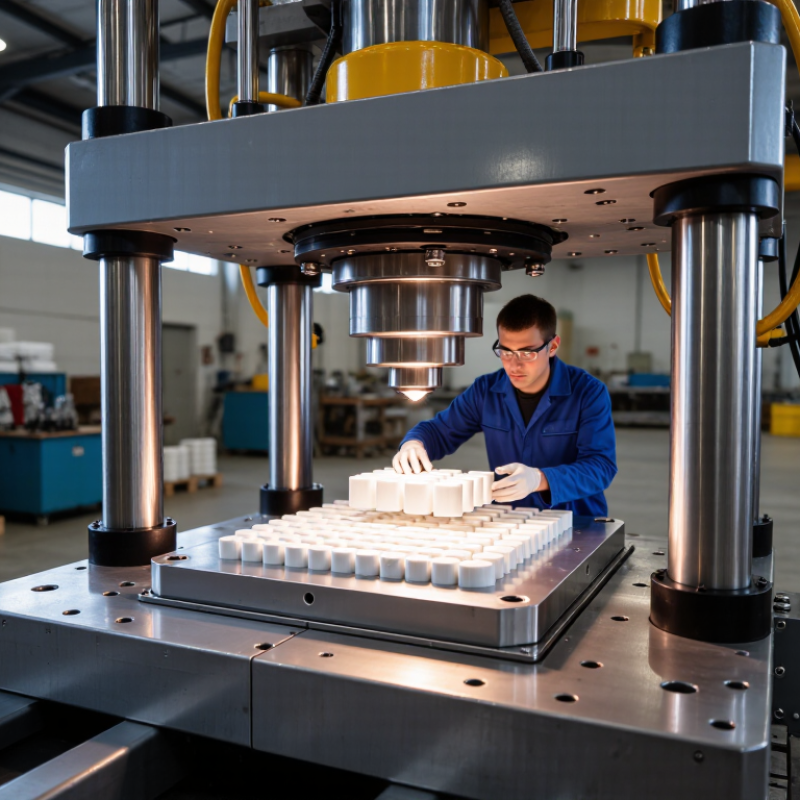
What Is a Compression Molding Machine?
A compression molding machine forms parts by pressing heated material inside a shaped mold. The operator places a measured charge into the lower mold half, then the machine closes the heated platens. Hydraulic force holds the mold shut while heat softens the material and pressure pushes it into the cavity. The shape comes from the mold, not from the press alone.
It takes careful control. Temperature, pressure, and hold time all affect how completely the material fills the mold and cures. A thick section may need more time than a thin one. Small vents let trapped air escape, though poorly placed vents can leave marks or allow material to flash at the edges. The finished part cools enough to retain its shape before removal. The result is not automatic. Even a well-prepared setup may need adjustment when material batches or part dimensions vary. A process sheet helps, but it cannot anticipate every change on the shop floor.
| Machine or Process Dimension | What It Does | Typical Data or Range | Practical Notes |
|---|---|---|---|
| Press and frame | Supports the mold and supplies the force needed to close it and shape the material. | Press capacities range from tens to thousands of tonnes, depending on machine size and application. | Required force depends on projected part area, material, mold design, and the pressure needed for the application. |
| Heated platens and mold | Heat the material in the mold so it can flow and, for thermosets, cure into a set shape. | Many thermoset molding processes use mold temperatures of roughly 130–180 °C. | The appropriate temperature depends on the compound and its supplier’s processing guidance; thermoplastics use different conditions. |
| Hydraulic or mechanical drive | Moves the press platen and controls mold-closing force and motion. | Hydraulic systems are common where high force and controlled motion are needed; machine speed and force vary by design. | Controls can set parameters such as approach speed, closing force, dwell time, and opening sequence. |
| Material charge | A measured amount of molding compound is placed in the open mold before it closes. | Charge mass and placement are set for the part and mold; there is no single standard charge size. | Consistent weighing and placement help reduce short fills, excess flash, and part-to-part variation. |
| Closing and material flow | The closing mold compresses the charge, spreading it into the cavity under heat and pressure. | Molding pressure is application-specific and is determined by the material, part geometry, and tooling. | The press tonnage is not the same as the pressure inside the mold cavity. |
| Cure or forming time | Holds the material in the closed mold so it can cure or take shape before removal. | Cycle times can range from seconds to several minutes, depending on material, part thickness, and process conditions. | Thermoset parts require sufficient cure; the required time should be established for the specific compound and part. |
| Opening and part removal | The press opens after the forming or cure stage, allowing the molded part to be removed. | Removal may be manual or assisted by ejectors or automation, depending on the machine and mold. | Safe guarding and the correct removal method help protect operators and prevent damage to the part or mold. |
| Common molded materials | Forms materials that can be shaped under heat and pressure in a matched mold. | Examples include sheet molding compound (SMC), bulk molding compound (BMC), phenolic compounds, and some rubber compounds. | Material selection determines processing conditions, finished properties, and whether the material cures or cools to retain its shape. |
| Data note: The ranges above are general process examples, not machine specifications or settings for a particular material. Always follow the compound supplier’s recommendations and validate conditions with the mold and part design. | |||