
Choosing an Electrostatic Collector is not a catalogue exercise. It is a decision about dust properties, gas conditions, operating hours, and maintenance capacity. The US Environmental Protection Agency’s Electrostatic Precipitator fact sheet reports collection efficiencies that can reach 99.9% under suitable conditions. That figure is not a promise for every installation. Particle size, resistivity, temperature, and gas flow all matter.
The stakes are practical. A mismatch can mean unstable performance, extra cleaning, or costly changes after installation. The World Health Organization reports that 99% of the global population breathes air exceeding its air-quality guideline limits. That finding describes a broad public-health challenge; it does not prove that any single collector will solve a site’s emissions problem. Buyers need application-specific evidence.
This guide offers ten checks for comparing suppliers and equipment. Ask for performance data tied to similar operating conditions, not just a headline efficiency. Review electrode materials, power controls, inspection access, spare-parts availability, and commissioning support. Request clear assumptions behind any guarantee. Small details matter. A narrow access door or an overlooked shutdown window can complicate routine maintenance. No checklist removes every surprise. That is worth admitting. Use these questions to test claims, identify missing information, and make a more reliable purchasing decision across borders.
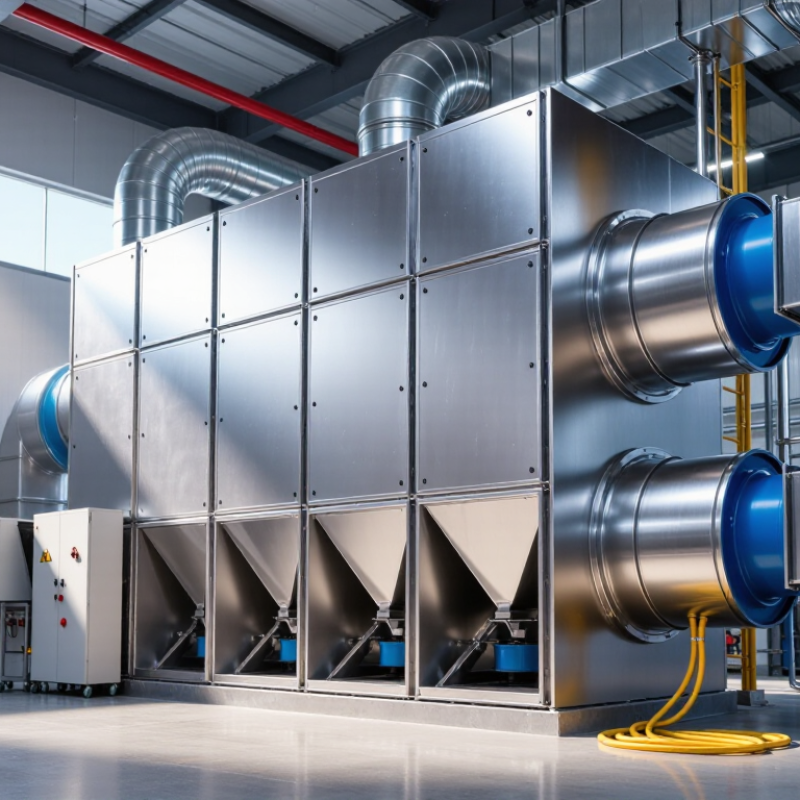
Before comparing electrostatic collectors, define the process they must serve. Record gas flow, temperature, moisture, inlet dust loading, and operating hours. Identify the particle size range and dust resistivity; both affect collection behavior. A hot, dry kiln exhaust and a cool, humid process stream may need very different designs.
Set a measurable outlet target, not just a general request for “high efficiency.” Specify the required emissions concentration, expected peak loads, and whether performance must hold during start-up or changing production. The U.S. Environmental Protection Agency’s Electrostatic Precipitator fact sheet (EPA-452/F-03-028, 2003) reports collection efficiencies of up to 99 percent. Treat that as a possible design outcome, not a promise: actual performance depends on particle properties, gas conditions, and equipment sizing. Ask suppliers to state assumptions behind any quoted figure.
Include the awkward details. Dust may become sticky when temperatures fluctuate, and maintenance access can be tighter than drawings suggest. Share representative test data where possible, including seasonal extremes. If data is incomplete, say so; an estimate built on a guessed dust profile can lead to an undersized collector. Define what measurements will verify performance after installation.
Electrostatic collectors use an electric field to remove particles from moving air, but their designs suit different operating conditions. In a dry, plate-type collector, a discharge electrode gives particles an electrical charge. The particles then move toward oppositely charged plates, where they accumulate until cleaning or rapping releases them into a hopper. Dust behavior matters. Fine, dry particles may collect efficiently, but poorly timed cleaning can send some back into the airflow.
Wet electrostatic collectors use a similar charging principle, then rinse the collection surfaces with water. This can help control sticky aerosols or fine particles that are difficult to remove from dry plates. It also adds water handling and wastewater considerations. A two-stage air cleaner separates charging from collection, while some industrial systems combine both functions in one chamber. The comparison is not always neat. Actual performance depends on particle size, moisture, gas temperature, and air velocity—not just the collector label.
Before comparing quotations, ask for test conditions that resemble your process. Check inlet particle loading, pressure drop, cleaning intervals, and access for electrode inspection. A practical check is to inspect dust samples and discuss how deposits behave during shutdowns. A specification sheet can still mislead if it assumes steady airflow or ideal dust. Real processes fluctuate. The right operating principle should match the material and maintenance capacity at the site.
Electrostatic collector materials should match the actual gas stream, not just a standard product description. Check electrode and casing materials against operating temperature, humidity, dust type, and any corrosive compounds. Ask for material grades and thicknesses, then compare them with the drawings and purchase specification. Small details matter. A thin coating or unsuitable insulator can become a maintenance problem.
Request certificates relevant to the destination market and the exact collector configuration. Confirm that each document is current, names the issuing body, and covers the supplied model—not merely a similar product. Ask for inspection records, performance test methods, and traceable serial or batch numbers. Ask for evidence. A certificate alone does not prove the unit will perform under your site conditions, so clarify test limits and acceptance criteria in writing.
Check the supplier’s production controls, technical staffing, and ability to provide replacement parts. A factory audit or a video walkthrough can help verify assembly, inspection, and packing practices. Request references for installations with comparable airflow and dust loads, while protecting customer confidentiality. It is easy to overlook service response time until a collector stops. I would also review the warranty wording carefully; it can leave gaps around consumables, corrosion, or site-specific conditions.
Compare materials, certifications, and supplier qualifications using a document-based checklist.
Bars show the suggested number of verifiable evidence items to request for each buying check. These checklist counts are not market statistics or supplier scores.
An electrostatic collector’s quoted price is only one part of its cost. Compare power use, routine cleaning, replacement components, and service access over several years. Ask suppliers to state what their estimate excludes. Freight, electrical work, lifting equipment, and commissioning can change the budget quickly. Small omissions add up.
Installation needs should be checked against the actual site, not just a product drawing. Confirm duct dimensions, airflow, available floor space, ceiling height, electrical supply, and access for maintenance. A technician should review the layout before purchase. Leave room to remove collection plates or other serviceable parts. It sounds obvious, but cramped access is often missed on paper.
For international shipping, request the packed dimensions and weight, not only the unit’s specifications. Check crate protection, moisture control, delivery terms, and who handles unloading and inland transport. Confirm that manuals and electrical information are available in a form your local installation team can use. Keep common spare parts in mind, too. A careful spreadsheet can still miss a local handling charge; verify the route with the forwarder before approving the order.
For an electrostatic collector, purchase price tells only part of the story. Ask how often its collection plates need inspection and cleaning under your actual operating conditions. Fine dust, oily particles, and long daily run times can change the service interval. Request a written maintenance schedule, including the tools, replacement parts, and staff skills required. Small details matter.
Review the warranty line by line. Check its term, covered components, labor costs, and exclusions for wear or improper installation. Ask whether shipping damaged parts is your responsibility. A warranty may look generous but offer limited help if troubleshooting takes weeks. Get the claim process and expected response time in writing before ordering.
Long-term support deserves equal attention. Confirm that manuals, wiring diagrams, and replacement components will remain available after installation. Ask who answers technical questions across your time zone, and whether remote guidance is included or billed separately. Keep a service log with cleaning dates, operating hours, and any drop in airflow or collection performance. It helps support staff diagnose changes. One weakness in many buying plans is assuming maintenance will be simple. It may not be, especially when the unit is installed in a cramped room. Check access before signing.
880 W 9th Street
Upland, California 91786
884 W 9th Street
Upland, California 91786
886 W 9th Street
Upland, California 91786
884 W 9th Street
Upland, California 91786