How to Choose the Right Dynamic Seal for Your Needs?
Choosing the right Dynamic Seal begins with understanding the equipment, not selecting a product from a catalogue. A rotating shaft, hydraulic piston, or reciprocating rod creates different sealing demands. Speed, pressure, temperature, fluid type, surface finish, and movement direction all influence performance. Even a small shaft scratch can create a visible leak. Installation quality matters, too.
Robert Flitney, a respected sealing engineer and author of Seals and Sealing Handbook, states, “The primary purpose of a seal is to prevent leakage.” This simple principle deserves careful interpretation. A reliable Dynamic Seal must control leakage while limiting friction, heat, wear, and energy loss. Nitrile rubber may suit mineral oil applications, while fluorocarbon compounds often tolerate higher temperatures and aggressive fluids. PTFE designs can reduce friction, but they may require stronger support and more precise installation.
Real operating conditions rarely match laboratory conditions perfectly. Dust, vibration, pressure spikes, shaft runout, and poor lubrication can change the result quickly. This is where selection becomes less certain. A datasheet can guide the decision, but it cannot replace field experience or application testing. Engineers should verify compound compatibility, groove dimensions, hardness, speed ratings, and expected service life. They should also question optimistic assumptions.
The best choice balances performance, maintenance access, cost, and reliability. Sometimes, the most advanced seal is unnecessary. Sometimes, choosing the cheaper option creates repeated downtime. A thoughtful Dynamic Seal selection process examines the entire sealing system and accepts that further testing may still be needed.
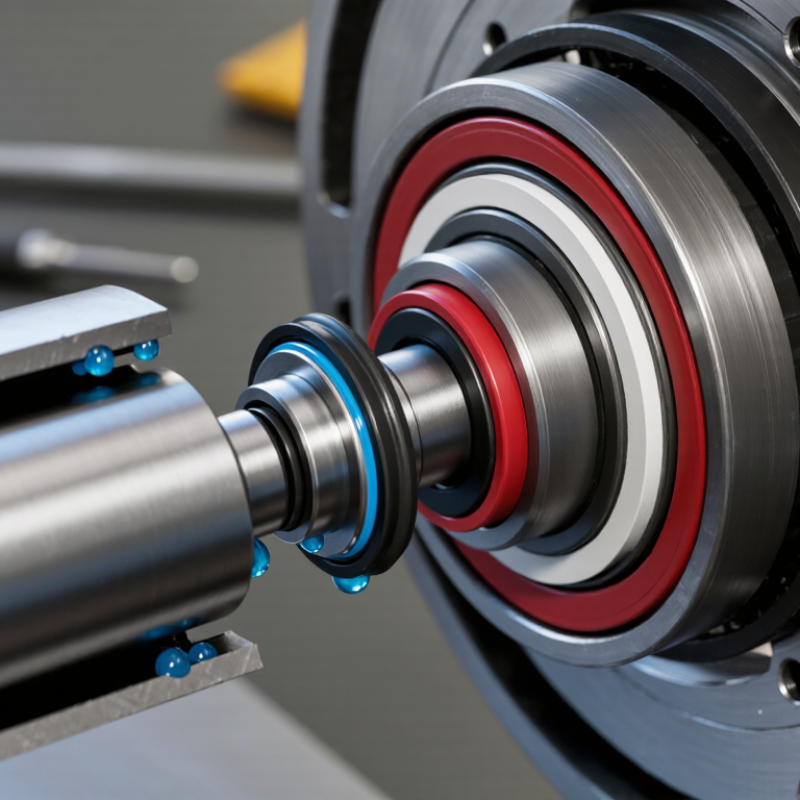
Understanding Dynamic Seal Types and Their Operating Principles
How to Choose the Right Dynamic Seal for Your Needs?
Understanding Dynamic Seal Types and Their Operating Principles
Choosing a dynamic seal starts with movement, not catalog shape. A shaft lip seal follows rotating motion through a thin lubricating film. A rod seal handles reciprocating motion, while a piston seal controls pressure across a moving bore. Wipers remove dust before it reaches the pressure seal. Mechanical seals work differently. Their faces press together, leaving a controlled fluid film that limits leakage and heat. The operating principle is simple, but the contact conditions are not.
Pressure, speed, temperature, fluid chemistry, and surface finish determine performance. Higher pressure can force an elastomer into the clearance gap, causing extrusion. A harder compound may resist extrusion, yet it can seal poorly on a rough shaft. In field inspections, a polished shaft with a visible wear track often signals misalignment, not just seal age. ISO 6194 provides terminology and test guidance for rotary shaft lip seals. It does not remove the need for application testing.
Industry data also supports careful selection. Grand View Research estimated the global mechanical seals market at about USD 4.6 billion in 2023. It projects continued growth through 2030. MarketsandMarkets reported a 2023 market estimate near USD 4.4 billion and forecast a 5.6% CAGR through 2028. These figures describe market value, not guaranteed sealing life. For a real choice, record load cycles, leakage limits, and installation conditions. A useful trial may reveal that the “best” material came from incomplete data. Leave room for revision.
Assessing Motion, Pressure, Temperature, and Speed Requirements
Choosing a dynamic seal starts with the movement, not the catalog name. A reciprocating rod needs different behavior from a rotating shaft. Measure stroke length, frequency, shaft runout, and direction changes. A seal may survive pressure but fail quickly under side loading. I have seen this overlooked during equipment reviews.
Pressure and speed must be evaluated together. Higher shaft speed increases frictional heat, while pressure raises contact stress. The U.S. Department of Energy reports that pumping systems can consume 25–50% of industrial electricity. Small sealing losses can therefore become expensive. Record pressure peaks, not only normal readings. Short spikes often explain premature leakage. Check the supplier’s pressure–velocity limits at your actual temperature, rather than using separate maximum values.
Temperature changes material behavior. Elastomers can harden, swell, or lose elasticity when exposed to heat or chemicals. The European Sealing Association’s technical guidance emphasizes considering media compatibility, temperature, pressure, and motion as connected variables. That approach is more reliable than choosing by fluid name alone. ISO 6194-1 also highlights shaft surface condition, housing dimensions, and installation quality for rotary seals. Keep a test record. Include start-up cycles, contamination, lubrication, and downtime. Some field failures still come from installation damage, which is easy to blame on the seal. Specification reviews should leave room for doubt. Real equipment rarely operates at one steady condition.
Matching Seal Materials to Fluids and Environmental Conditions
A dynamic seal succeeds only when its material matches the fluid and working environment. Start with the fluid, not the seal catalog. Mineral oils often suit nitrile compounds, while hot chemicals may require fluorocarbon materials. Water and steam can favor EPDM, but EPDM generally performs poorly with petroleum oils. For low-friction movement and broad chemical resistance, PTFE is useful, though it may need energizing support. Polyurethane handles abrasion well in hydraulic service, but high heat can shorten its life.
Temperature changes matter as much as peak temperature. A seal exposed to a 180°C spike may behave differently from one held at 120°C continuously. Check pressure, shaft speed, motion type, and fluid additives together. A reciprocating rod creates different demands than a rotating shaft. Inspect shaft finish, alignment, and surface hardness before selecting dimensions. Tiny scratches can become leakage paths. Test under load.
Do not rely on a compatibility table alone. Tables rarely capture contamination, installation damage, or rapid pressure changes. A common field finding is a chemically compatible material failing after dry startup overheats its sealing lip. That detail is easy to miss. Record fluid concentration, operating range, cleaning chemicals, and replacement intervals. Expect trade-offs. When data is uncertain, compare two materials in a controlled trial and document the failure mode. A technically suitable seal can still fail when installation practices or operating conditions are overlooked.
How to Choose the Right Dynamic Seal for Your Needs?
Matching seal materials to fluids and environmental conditions
The chart shows indicative fluid-compatibility ratings for common dynamic seal materials: 1 = poor compatibility and 5 = excellent compatibility. NBR is commonly selected for mineral oils, EPDM performs well with water and steam, FKM is suitable for fuels and many chemicals, while PTFE provides broad chemical resistance. Actual seal selection should also consider temperature, pressure, shaft speed, abrasion, and fluid additives.
Selecting the Right Seal Design, Size, and Installation Method
Choosing a dynamic seal starts with motion, not catalog availability. Rotary shafts, reciprocating rods, and oscillating joints require different seal designs. An elastomeric lip seal may suit low-pressure rotation, while a mechanical seal handles higher pressure and fluid containment. Confirm temperature, pressure, speed, fluid chemistry, and shaft movement before selecting materials. The U.S. Department of Energy reports that optimized pumping systems can reduce energy use by 20–50%. Excessive seal friction can erase part of that gain.
Size selection needs more than matching an inner diameter. Check shaft diameter, housing bore, groove depth, radial squeeze, and allowable extrusion gap. ISO 3601 provides dimensional guidance for O-rings, while ISO 6194 addresses rotary shaft lip seals. Measure the actual shaft when possible. Manufacturing tolerances and wear can change the fit. A spreadsheet can still miss reality. The first selection is often wrong.
Installation determines whether a good seal survives. Clean the groove, remove sharp edges, and use a lead-in chamfer on the shaft. Apply only a compatible lubricant. Stretching an O-ring too far, twisting it, or forcing a lip across threads can create immediate leakage. Use a fitting sleeve for delicate lips, then verify concentricity and surface finish. Record installation torque, lubricant type, and inspection results. Small records reveal repeated failure patterns.
Verifying Performance Through Testing, Maintenance, and Service Life Metrics
Choosing a dynamic seal requires more than matching diameter, pressure, and temperature. Performance must be verified under real movement, media, and installation conditions. ISO 3601 provides dimensional and quality requirements for O-rings, while ISO 23936 addresses material compatibility in demanding fluid environments. These standards create a reliable starting point, not a complete answer.
Testing should measure leakage, friction, wear, compression set, and temperature change over time. A useful test reproduces shaft speed, pressure cycles, misalignment, and fluid contamination. ASTM G99 wear-testing methods can help compare material behavior under controlled contact conditions. However, laboratory results may not predict field life perfectly. A clean test report can still mislead when technicians install seals with damaged tools or poor surface finishes.
The U.S. Department of Energy’s Operations and Maintenance Best Practices Guidebook estimates that maintenance costs can represent 60% to 75% of total life-cycle costs. That figure makes inspection and service records commercially important, not merely administrative.
Tips:
Record leakage rates, operating hours, pressure cycles, and replacement causes. Inspect seal lips for heat cracks, uneven wear, and embedded particles. Use Weibull analysis when enough failure data exists, but avoid forcing a precise service-life estimate from a small sample. In field reviews, the simplest metric is often missed: how long the seal performs before leakage exceeds the site’s acceptable limit. That limit should be agreed before testing begins.