
China’s drilling chemicals sector serves oil and gas projects with fluid additives, lost-circulation materials, lubricants, and cementing chemicals. Choosing a manufacturer is not just a price comparison. Product consistency, technical support, delivery reliability, and compatibility with well conditions all matter. A sample drum may look ordinary; its performance under heat, pressure, and changing formations is what counts.
Drilling-fluid specialist John A. Zamora’s technical work reflects a practical principle: “Drilling chemicals must be matched to the well’s conditions, not selected by habit.” This sentence is an editorial paraphrase, not a verified verbatim quotation. It captures a useful starting point for comparing Chinese manufacturers. Buyers should examine documented specifications, quality-control practices, product testing, and the supplier’s ability to answer field questions clearly. Ask for relevant test data. Check the details.
This overview introduces leading manufacturers in China and the factors that distinguish them, including product range, production capability, export experience, and technical service. Company claims deserve careful review; a polished brochure cannot replace evidence. No supplier is perfect, and a strong shortlist may still need follow-up checks. The aim is practical: help readers identify credible options and ask better questions before selecting a partner for demanding drilling operations.
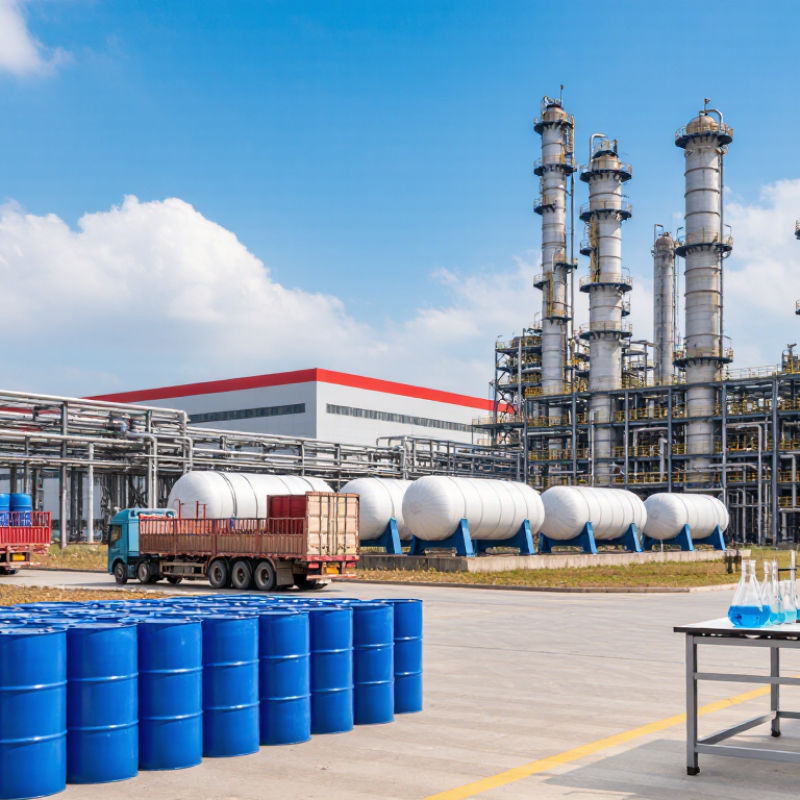
Drilling chemicals support the changing conditions inside a well, from circulating mud to controlling fluid loss. Their scope includes products that adjust density, viscosity, filtration, lubrication, and shale stability. On a rig, these functions are practical: a mud engineer may check how a sample pours, how much water separates, or whether cuttings remain suspended. Small changes matter. A fluid that performs well in fresh water may behave differently in salty water or at elevated temperatures.
Not always.
Common product categories include weighting agents, viscosifiers, fluid-loss additives, shale inhibitors, lubricants, and lost-circulation materials. Each serves a distinct purpose, though formulations often work together. Manufacturers in China may offer several categories, but product names alone reveal little about field performance.
Buyers should compare technical data, test conditions, batch consistency, and compatibility with the planned mud system. A tidy product sheet can hide important details, and even a careful laboratory test cannot reproduce every well condition. That limitation deserves attention.
Clear specifications and repeatable testing help engineers judge whether a chemical suits a particular formation, water source, and operating temperature.
China’s drilling chemicals manufacturing landscape is shaped by a large, active energy sector and varied field conditions. The National Bureau of Statistics of China reported crude oil production of 212.82 million tonnes in 2024, up 1.8% year on year. Natural gas output reached 246.4 billion cubic metres, up 6.2%, according to its Statistical Communiqué on the 2024 National Economic and Social Development. These figures point to ongoing drilling demand, but they do not measure chemical consumption directly. Not a perfect proxy.
Manufacturers serve wells with fluid additives, lost-circulation materials, shale inhibitors, lubricants, and cementing chemicals. Performance depends on more than price: a fluid must retain viscosity under heat, control filtration, and tolerate local water chemistry. China’s varied geology makes formulation and field testing important, while nearby production and distribution can help shorten delivery times. Technical documentation and consistent batch quality also matter to operators comparing suppliers. The landscape is not uniform; capabilities can differ between producers, and published information does not always make comparisons easy. Buyers should verify product specifications and test results against the conditions of each project.
Leading drilling-chemicals manufacturers in China are best profiled by their formulation expertise, production control, and field support. The National Bureau of Statistics reported 208.91 million tonnes of crude oil production in 2023, up 2.1% year over year, in its Statistical Communiqué on National Economic and Social Development. This indicates sustained upstream activity, though production alone does not measure demand for drilling chemicals. That proxy is imperfect.
Manufacturers typically serve distinct needs: fluid-loss control, shale inhibition, lubrication, and cementing additives. Strong technical teams test products against changing salinity, temperature, and formation conditions. Look for documented quality procedures, batch consistency, and laboratory results tied to actual field conditions. Details matter. A supplier’s profile should also show how it supports mud engineers when circulation, viscosity, or filtration changes unexpectedly. Clear handling guidance and responsive troubleshooting can reduce delays at the rig. Product claims still need verification through site trials; lab performance does not always transfer neatly to the well. That gap deserves attention. When comparing Chinese manufacturers, buyers can assess technical documentation, production capacity, and application support without relying on sales language alone.
| Manufacturer Capability Profile | Representative Product Categories | Primary Function | Typical Drilling Applications | Common Evaluation Measures |
|---|---|---|---|---|
| Drilling-fluid viscosifier and clay-material supplier | Bentonite and other clay-based viscosifying materials | Increase viscosity and help suspend drilled solids and weighting materials in water-based drilling fluids. | Water-based mud systems where viscosity and suspension properties need to be developed. | Viscosity, yield point, filtration behavior, and material properties assessed using applicable drilling-fluid test procedures. |
| Weighting-material supplier | Barite and other weighting materials | Increase drilling-fluid density to help manage formation pressure. | Drilling fluids requiring density adjustment, subject to well design and fluid-system compatibility. | Specific gravity, particle-size distribution, and applicable material specifications, including API Spec 13A where relevant. |
| Filtration-control additive supplier | Polyanionic cellulose (PAC), carboxymethyl cellulose (CMC), and starch-based additives | Reduce fluid loss and support formation of a filter cake, depending on the formulation and operating conditions. | Water-based drilling fluids that require filtration control. | Filtration volume, filter-cake characteristics, viscosity effects, and performance under the intended test conditions. |
| Shale-inhibition additive supplier | Potassium chloride (KCl), partially hydrolyzed polyacrylamide (PHPA), and glycol-based additives | Help limit shale hydration, dispersion, or instability; effectiveness depends on the formation and fluid formulation. | Water-based systems used in formations susceptible to shale-related wellbore instability. | Shale recovery or dispersion tests, rheology, salinity, and compatibility with the complete mud system. |
| Lubricant and torque-control additive supplier | Water-dispersible lubricants and specialty liquid or solid lubricating additives | Reduce friction in the drilling system and help manage torque and drag. | Drilling conditions where friction reduction is required, subject to equipment and fluid-system compatibility. | Lubricity, compatibility, foaming tendency, and effects on filtration and rheology. |
| Lost-circulation-material supplier | Cellulose-based materials, mica, and granular or fibrous plugging materials | Help bridge or seal loss zones and reduce drilling-fluid losses; selection depends on loss severity and opening size. | Formations with partial or severe lost circulation, using particle sizes suited to the treatment plan. | Particle-size distribution, material form, mixing behavior, and performance in an appropriate plugging or loss-circulation test. |
This table summarizes common product capabilities and evaluation criteria for drilling-chemical suppliers. It is a product-category overview, not a ranking or a company-specific profile; actual specifications and performance vary by formulation and operating conditions.
Reliable drilling chemicals begin with controlled production, not impressive claims. Chinese manufacturers may use milling, drying, blending, or granulation to achieve consistent product properties. The right process depends on the material and its intended use. For barite, particle-size distribution and specific gravity need close attention. Small shifts matter.
Quality checks should follow the relevant product specification. For materials covered by API Spec 13A, buyers can request test reports showing applicable properties and methods. Moisture, residue, density, and particle size may be checked, depending on the product. Representative sampling matters too; a perfect result from one sample says little about an entire shipment. Batch numbers and retained samples help connect test results to delivered goods.
ISO 9001 describes a quality management system, not proof that every chemical meets a particular performance requirement. Ask for current certificates, batch-level records, and clear acceptance limits. Where possible, compare supplier results with independent laboratory testing. No test catches everything. A polished datasheet is not the whole story: storage conditions, packaging integrity, and repeatability between batches also deserve attention. Small gaps in documentation can make supplier comparisons harder, so clarify them before placing an order.
Top Drilling Chemicals Manufacturers in China
How to Evaluate Chinese Drilling Chemicals Suppliers
Evaluating Chinese drilling chemicals suppliers takes more than comparing quoted prices. A supplier should provide batch-level certificates of analysis, clear product specifications, and traceable production records. Ask for recent test results for the exact grade you plan to buy. Check parameters such as moisture, pH, and viscosity under stated test conditions. Small details matter.
The IEA’s World Energy Investment 2024 report projected global upstream oil and gas investment would rise 7% in 2024, to about US$570 billion. That scale makes dependable procurement important, but it does not prove any supplier’s quality. Request samples and compare them using consistent procedures, including applicable API testing methods. Also review change-control practices, storage life, packaging, and how the supplier handles out-of-specification batches.
A plant visit can reveal whether incoming materials are checked and batches are recorded, rather than relying on polished brochures. Verify that technical staff can explain product limits and recommend tests for the planned drilling-fluid system. Ask for safety data sheets and documentation in a language your team can review. Even a careful checklist has a blind spot: laboratory repeatability cannot fully recreate changing conditions at a rig. Test a sample in your own fluid system before placing a large order.
Suggested evaluation weights, not measured market data: prioritize product quality and technical compliance, then verify performance through application-specific testing. Consider relevant API testing practices, quality-management processes, supply reliability, environmental and safety documentation, and technical support.
880 W 9th Street
Upland, California 91786
884 W 9th Street
Upland, California 91786
886 W 9th Street
Upland, California 91786
884 W 9th Street
Upland, California 91786