Why Is Plywood the Best Choice for Your Next Project?
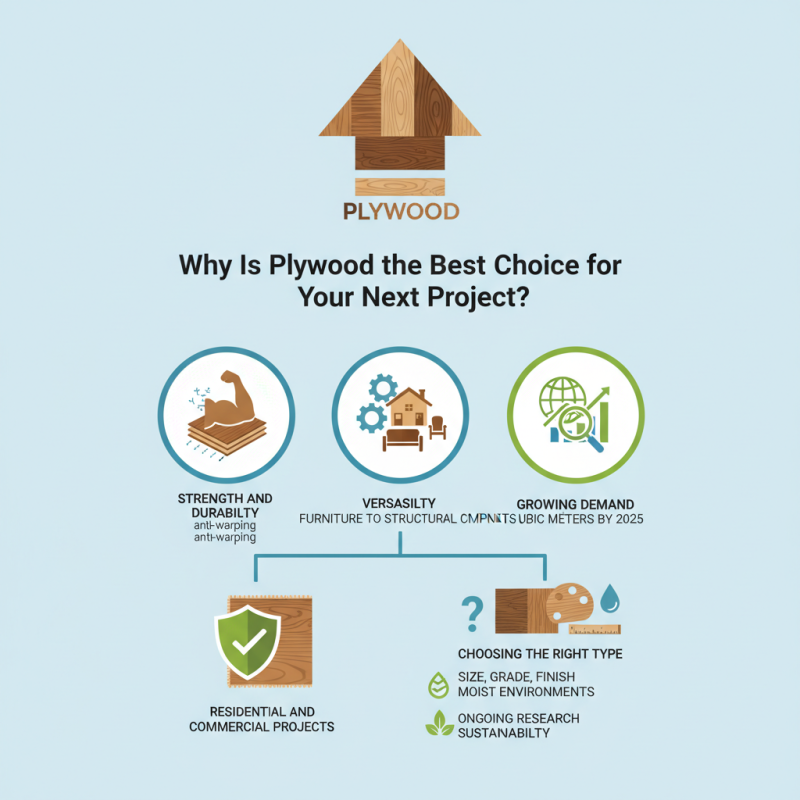
Plywood has emerged as a go-to material for various construction projects. With remarkable versatility, it caters to a wide range of applications, from furniture to structural components. Industry reports indicate that global plywood demand is projected to reach 116 million cubic meters by 2025, demonstrating its growing importance.
The strength and durability of plywood stand out. It offers excellent resistance to warping and cracking compared to solid wood. According to the American Plywood Association, properly engineered plywood can withstand high stress and loads. This makes it suitable for both residential and commercial projects.
While plywood is an outstanding choice, selecting the right type can be challenging. Not all plywood is created equal; some types may not perform well in moist environments. It is crucial to understand specific project requirements. Buyers should consider factors like size, grade, and finish when choosing plywood. As the industry evolves, ongoing research is essential. This ensures that plywood continues to meet user needs in quality and sustainability.
Understanding Plywood: Composition and Types
Plywood is increasingly recognized for its versatility and durability in construction and design. Understanding its composition is crucial. Plywood is made from thin layers of wood veneer, which are glued together. This cross-layering technique enhances strength and stability. According to the American Plywood Association, plywood can withstand significant stress compared to solid wood, making it ideal for various applications.
Different types of plywood cater to specific needs. Hardwoods, such as birch or oak, are best for visible surfaces, while softwoods, like pine, are often used in structural applications. The International Wood Products Association reports that plywood can reduce material waste by up to 50%. This makes it not only a cost-effective choice but also an environmentally friendly option, as it utilizes less wood than solid lumber.
However, plywood isn’t without its drawbacks. It can be susceptible to moisture if not treated properly. Improper storage can lead to warping. Additionally, not all plywood is created equal; some may have voids that compromise structural integrity. Understanding these nuances ensures that designers and builders make informed choices. Focused research and careful selection are essential steps in any project involving plywood.
Benefits of Using Plywood in Construction and Design
Plywood stands out in construction and design for its remarkable versatility and strength. Made from thin sheets of wood veneer, plywood provides excellent durability. It can withstand heavy loads, making it suitable for various applications, from furniture to structural components. Its light weight also eases handling during projects.
When using plywood, consider the different types available. Each variety serves specific needs. For instance, exterior-grade plywood excels in moisture resistance, ideal for outdoor use. In contrast, interior-grade plywood is perfect for indoor applications like cabinetry. Choosing the right type can enhance the longevity of your project.
Tips: Always check the thickness of plywood for your project’s requirements. Thicker sheets offer more strength but can be heavy. Don’t forget to factor in cost when selecting materials. Plywood can range significantly in price, depending on the grade and type. Paying attention to these details helps avoid overspending and ensures satisfaction.
Benefits of Using Plywood in Construction and Design
Factors to Consider When Choosing Plywood for Your Project
Choosing plywood for your next project requires careful consideration of several key factors. The thickness of the material is crucial. For structural applications, 3/4-inch plywood is often the standard, providing optimal strength and durability. According to the APA - The Engineered Wood Association, thicker plywood can hold more weight, making it suitable for furniture and flooring.
Another important aspect is the grade of plywood. It ranges from A to D, with A being the highest quality. A-grade plywood features a smooth surface with minimal knots. This makes it ideal for visible surfaces. Furthermore, understanding the type of wood used in plywood is essential. Different woods, such as birch or maple, offer unique characteristics. For instance, birch plywood is known for its fine grain, making it a popular choice for cabinetry.
It's also vital to assess the plywood's durability, particularly for outdoor projects. Marine-grade plywood is treated to withstand moisture, but it can be pricier. A study revealed that untreated plywood can delaminate in damp conditions. Therefore, it may not be a suitable choice for outdoor furniture without proper sealants. Reflecting on these details is necessary for successful outcomes.
Comparing Plywood with Other Materials: Why Plywood Stands Out
When selecting materials for construction or crafting, plywood often emerges as a top choice. It stands out due to its unique blend of strength and versatility. Unlike solid wood, plywood is engineered with multiple layers that provide superior stability. This makes it less prone to warping or cracking. It’s especially beneficial in environments with fluctuating humidity.
Plywood also surpasses many alternatives in terms of weight-to-strength ratio. For example, compared to MDF or particleboard, plywood boasts better durability. It can support heavy loads, making it ideal for furniture and cabinetry. However, one must consider its finish; raw plywood often requires sanding or sealing to achieve a polished look.
Cost is another factor. Although plywood can be pricier than options like OSB, its longevity often justifies the investment. Some may find it challenging to work with without the right tools. Proper saw blades are essential to avoid splintering. This requires some planning and skill. Overall, the merits of plywood in numerous projects highlight why it remains a preferred material in many fields.
Practical Applications of Plywood in Various Industries
Plywood is a versatile material with widespread applications across various industries. In construction, it serves as a critical component in framing, flooring, and roofing. Its layered structure adds strength while maintaining a lightweight profile. Builders often choose plywood for its durability in structural applications. Different grades provide options for specific needs, yet selecting the right type can be a challenge for some.
In furniture design, plywood offers flexibility and aesthetic appeal. Many designers appreciate its natural finish and ease of manipulation. It can be shaped, bent, and painted, allowing for creative expressions. However, the finishing process can be tricky. Imperfections in surface treatment may lead to unsatisfactory results. That said, the right techniques can enhance the overall design, creating unique pieces.
Plywood is also gaining popularity in the automotive industry. It is used in the construction of vehicle interiors and components. Manufacturers value its lightweight nature, which contributes to fuel efficiency. Yet, issues can arise during bonding processes. Ensuring strong adhesion is crucial for performance and safety. Sometimes, these aspects are overlooked in rushed projects. Attention to detail remains key for achieving the desired outcomes.