10 Tips for Choosing the Best Epoxy Adhesive
Choosing the right Epoxy Adhesive is not simply a matter of picking the strongest label. A bond that performs well on a clean metal bracket may fail on dusty concrete, flexible plastic, or a damp surface. The right choice depends on the materials, the joint design, the environment, and the time available for curing. Small details matter. So does the product’s technical data sheet.
Adhesion researcher Anthony J. Kinloch’s work offers a useful principle, paraphrased here: “A reliable adhesive joint depends on the adhesive, the surfaces, and the conditions around the bond.” That is a practical starting point, not a guarantee. A careful selection cannot fix poor surface preparation or a gap the product was never designed to fill. And real-world results can vary.
This guide presents 10 tips for choosing an epoxy adhesive, from matching the formula to your materials to checking cure time, temperature limits, viscosity, and strength requirements. You will also see why application method and surface preparation deserve attention before the cartridge is opened. A small test on scrap material can reveal useful problems early. It may feel like extra work. Often, it saves a failed repair. No single checklist replaces the manufacturer’s instructions, but a thoughtful comparison can help you make a more dependable choice.
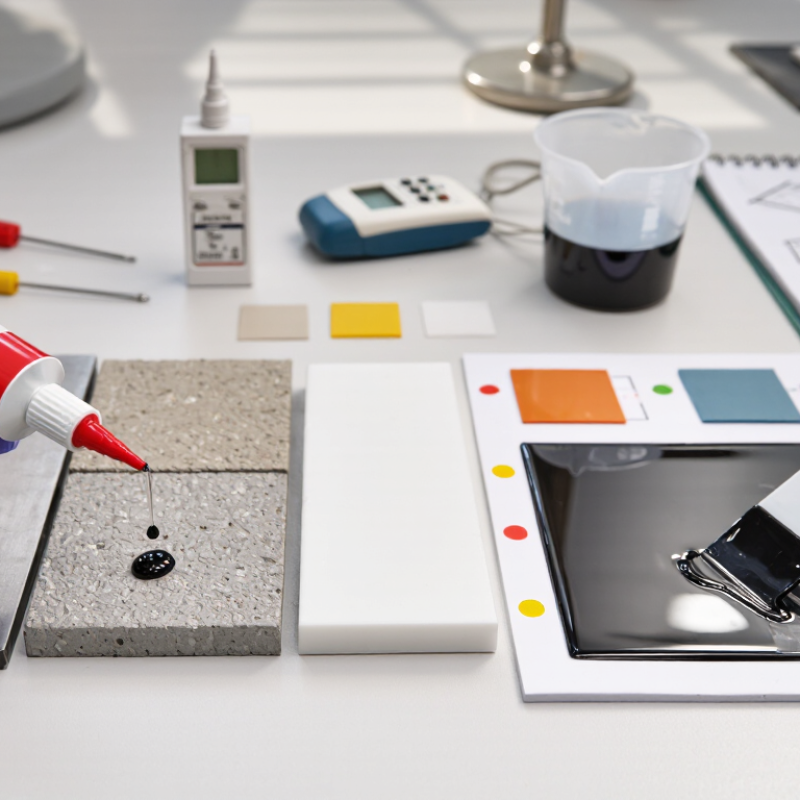
Understand How Epoxy Adhesives Cure and Form Bonds
Epoxy adhesive forms a bond through a chemical reaction between resin and hardener. The mixture crosslinks as it cures, creating a solid material that grips prepared surfaces. It does not simply dry like paint. Small detail. It matters when planning a repair, because a surface can feel firm before the bond reaches its full strength.
Check the instructions for the exact mixing ratio and working time. Measure carefully; too much hardener does not necessarily make epoxy cure faster. Mix slowly, scraping the sides and bottom of the cup so no unmixed streaks remain. A cloudy patch or sticky edge can signal poor mixing. Temperature also affects curing: a cool garage may slow the reaction, while a large, deep batch can heat up noticeably. Follow the product guidance rather than guessing.
Prepare both surfaces by removing dust, grease, and loose material, then allow them to dry. Roughening smooth surfaces may help, if the instructions allow it. Apply an even layer and hold the pieces still with gentle, steady pressure. Avoid squeezing out all the adhesive. Cure times vary, and “set” is not always “fully cured.” I find that distinction easy to overlook, so checking the stated cure schedule is worth the pause. A small test joint can reveal whether the fit and preparation are sound before a more important repair.
How Temperature Affects Epoxy Curing
Warmer conditions generally speed up epoxy curing, while cooler conditions slow it down. The bars show a calculated, illustrative reaction-rate model—not universal cure times or product-specific data—using an assumed activation energy of 50 kJ/mol and normalizing the rate at 23°C. Follow the adhesive manufacturer’s temperature and cure instructions.
Identify the Materials and Conditions of the Bonding Task
Before choosing an epoxy adhesive, identify both surfaces and the conditions they will face. Aluminum, ceramic, concrete, and many plastics behave differently during bonding. Check the adhesive’s material guidance, especially for low-energy plastics such as polyethylene. Some plastics may need another joining method. That detail is easy to miss.
Consider whether the joint will face moisture, heat, sunlight, vibration, or repeated stress. A repair on a dry indoor shelf has different needs from a fitting exposed to rain or temperature swings. Also note the joint design: close-fitting surfaces usually need less gap-filling ability than uneven or porous ones. Clean off oil and dust, then follow the stated surface-preparation instructions. A clean-looking part can still carry residue.
Tip: Write down the materials, expected temperature range, and likely exposure before comparing adhesives. Check cure time and the recommended bond-line thickness, too. If the material is uncertain, test a small, hidden area first. It takes extra time, but guessing can cost more. I still find the environment detail easiest to underestimate.
Match the Epoxy Formulation to the Application
Match the epoxy formulation to the force, materials, and conditions it will face. A rigid, high-strength grade can suit a fixed metal bracket, while a tougher, more flexible grade may better tolerate vibration or impact. For a vertical repair, choose a non-sag formula; for a narrow crack, check whether the viscosity allows it to flow into the gap. Small details matter.
Tip: Read the cure-temperature and service-temperature ranges before buying. A formulation that cures slowly in a cold workshop may leave the joint weak or tacky. A fast cure can save time, but it also shortens your adjustment window. Test on a scrap piece first. It’s easy to overlook.
Tip: Compare test methods, not just headline strength. ASTM D1002-10(2019) specifies a 12.7 mm overlap in its standard metal-coupon lap-shear setup. Its reported strength is useful for comparing similar tests, but it does not predict peel or impact performance by itself. Match the substrate, surface preparation, and loading direction to your real joint. A clean, lightly abraded surface can help, but follow the product’s preparation instructions; abrasion alone cannot fix contamination or a poor fit.
Compare Strength, Cure Time, and Environmental Resistance
10 Tips for Choosing the Best Epoxy Adhesive: Compare Strength, Cure Time, and Environmental Resistance
A high shear-strength figure is useful only when the test matches your joint. ASTM D1002 measures apparent shear strength in bonded metal lap joints, using a test speed of 1.3 mm/min. That is a useful comparison point, not a guarantee for a plastic bracket or a peel-loaded corner. Check the tested materials, bond-line thickness, and surface preparation. A dusty, oily surface can undermine even a strong adhesive. Small details matter.
Cure time also needs context. A product may become handleable within minutes but need much longer to reach full strength. Compare the stated cure schedule at your actual workshop temperature; a cold garage can slow curing. Look for data on mix ratio, working time, and strength development, not just “fast cure.” It’s easy to rush this part.
For environmental resistance, ask for results after exposure to the conditions your joint will face: water, heat, or repeated temperature changes. ASTM D1183 provides methods for assessing adhesive-bond durability under accelerated aging, but those results do not perfectly predict every real-world service life. Read the test conditions closely. If the datasheet omits them, request clarification before choosing. I’ve learned that “water resistant” alone says too little. Test a small, representative joint when failure would be costly.
Check Handling Requirements and Test the Bond Before Use
A strong epoxy is not automatically the right epoxy for every repair. Match its working time to the job: a small crack may need a fast-setting formula, while aligning a larger part takes more time. Check the product instructions for surface preparation, mixing ratio, temperature range, and clamp time. Dust, oil, or a cold workbench can weaken a bond. Small details matter.
Tip: Check handling requirements before opening the container. Wear the protective gear specified in the instructions, and prepare tools and parts in advance. Measure each component accurately; guessing can leave soft or tacky spots. Note the pot life, too. Epoxy may begin thickening before it looks unusable. That is easy to misjudge.
Tip: Test the bond on a spare piece of the same material. Clean and prepare it as you would the actual surfaces, then mix and apply a small batch. Let it cure for the full stated period, not just until it feels firm. Check for gaps, peeling, or a brittle failure when gently stressed. A test cannot reproduce every real-world condition, but it can reveal poor fit, rushed preparation, or an unsuitable cure temperature before the repair depends on it.