
China’s Structural Grating industry combines large-scale steel production with increasingly demanding engineering requirements. This guide examines ten notable Chinese suppliers, not through marketing claims alone, but through practical purchasing criteria. These include load capacity, bearing-bar dimensions, panel tolerances, welding quality, surface treatment, and documented testing.
On a real project, the details are visible. A platform may carry forklifts, wet machinery, or workers wearing heavy safety boots. A small mismatch in panel size can delay installation. Poor galvanizing can leave early corrosion around welds and cut edges. Quality-management expert W. Edwards Deming stated, “Quality comes not from inspection, but from the improvement of the production process.” That principle applies directly to Structural Grating manufacturing.
The selected suppliers are assessed through product range, factory experience, export records, certifications, customization ability, and customer support. Their capacity to produce galvanized, painted, stainless steel, and specialized grating is also considered. Some companies may appear strong on paper but provide limited technical evidence. That deserves caution.
This is not an absolute ranking. Supplier performance can change with materials, production teams, and project scale. Buyers should request drawings, mill certificates, welding specifications, and recent inspection records before placing orders. Site conditions matter too. A grating designed for a light walkway may fail as an industrial floor panel.
The comparison aims to support informed decisions. It also recognizes an uncomfortable truth: the lowest quotation is rarely the complete cost. Safety, fit, maintenance, and delivery reliability deserve equal attention.
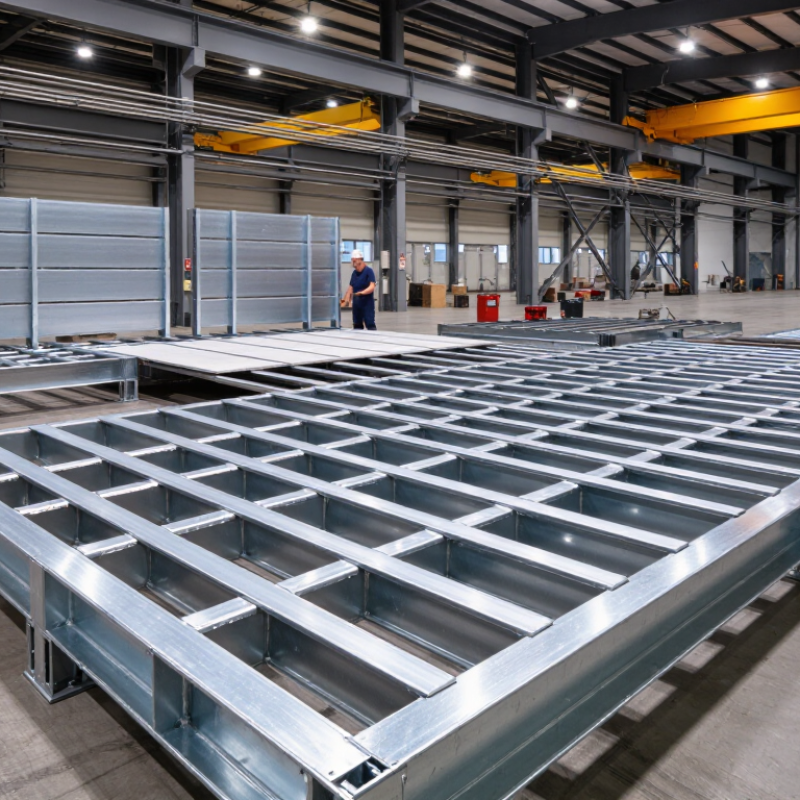
Structural Grating: What Is It and Where Is It Used?
Structural grating is a load-bearing floor system made from parallel bearing bars and crossbars. The open grid carries people, tools, and equipment while allowing air, light, water, and debris to pass through. Unlike decorative grilles, it is engineered for span, load, deflection, and corrosion exposure. Common materials include carbon steel, stainless steel, and aluminum. Surface options include smooth, serrated, and galvanized finishes.
Grand View Research estimated the global metal grating market at about USD 1.7 billion in 2023. Its report projects continued growth through 2030, driven by infrastructure, energy, and industrial construction. Structural grating appears on factory platforms, stair treads, walkways, drainage covers, and equipment access areas. It also supports maintenance routes around tanks, pumps, and pipelines. Small details matter. A wet, oily walkway may need serrated bars for safer footing. A coastal platform may require stronger corrosion protection.
Designers normally check span length, live load, wheel load, bearing direction, and fixing methods. Standards such as ANSI/NAAMM MBG 531 and OSHA walking-surface requirements provide useful guidance, but local codes still control the final design. The World Steel Association reported 1,892.1 million tonnes of crude steel production in 2023, showing the scale of the material supply base. Yet material volume does not guarantee suitability. A frequent mistake is choosing panels by price alone. Field conditions often prove that drainage, access, and maintenance deserve equal attention.
| No. | Common Product Configuration | Typical Material | Representative Bar or Mesh Size | Manufacturing Method | Typical Surface Finish | Common Applications | Relevant Standards or Design References |
|---|---|---|---|---|---|---|---|
| 1 | Standard Welded Steel Grating | Carbon steel, commonly Q235B or Q355B | Bearing bars such as 25 × 3 mm or 30 × 3 mm; common bearing-bar spacing includes 30 or 40 mm | Resistance-welded cross bars and bearing bars | Hot-dip galvanized after fabrication or industrial paint | Factory walkways, service platforms, pipe racks, ventilation areas, and maintenance floors | YB/T 4001.1; EN ISO 14122-2; project structural-load calculations |
| 2 | Serrated Welded Steel Grating | Carbon steel, commonly Q235B or Q355B | Common bearing-bar heights of approximately 25–50 mm with serrated top surfaces | Resistance welding followed by serration of the bearing-bar surface | Hot-dip galvanized, painted, or untreated for temporary indoor use | Wet walkways, water-treatment plants, outdoor platforms, ramps, and areas requiring enhanced slip resistance | YB/T 4001.1; EN ISO 14122-2; site-specific slip and load requirements |
| 3 | Heavy-Duty Welded Grating | Structural carbon steel, often Q355B or an equivalent grade | Typical bearing bars may be 50 × 5 mm or larger; spacing is selected for the design load | Heavy-duty resistance welding with reinforced bearing bars | Hot-dip galvanized or protective coating system | Heavy equipment areas, industrial loading zones, access roads, drainage channels, and vehicle-rated covers when engineered | YB/T 4001.1; EN 1993 for steel design where applicable; engineered vehicle-load criteria |
| 4 | Press-Locked Steel Grating | Carbon steel or stainless steel | Common bearing-bar depths of 25–50 mm with cross bars mechanically pressed into pre-punched slots | Cross bars are pressed into slots in the bearing bars | Hot-dip galvanized, painted, stainless pickled, or passivated | Architectural floors, ceiling panels, machine guards, platforms, and applications requiring a clean appearance | EN ISO 14122-2; applicable material and coating specifications |
| 5 | Swage-Locked Aluminum Grating | Aluminum alloy such as 6061-T6 or an equivalent structural aluminum grade | Common bearing-bar depths of 25–50 mm with tubular or rectangular cross bars | Cross bars are mechanically swaged into bearing bars | Mill finish, anodized, or powder coated | Corrosive environments, marine facilities, light industrial platforms, roof access, and areas requiring low weight | EN 1999 for aluminum design where applicable; EN ISO 14122-2; project load calculations |
| 6 | Stainless Steel Welded Grating | Stainless steel grades 304 or 316/316L | Common bearing bars include 25 × 3 mm and 30 × 3 mm, selected according to span and load | Resistance-welded construction | Pickled and passivated, electropolished, or mechanically finished | Food-processing plants, pharmaceutical facilities, chemical plants, wastewater treatment, and coastal areas | EN ISO 14122-2; applicable stainless-steel material specifications; hygienic-design requirements where relevant |
| 7 | Pultruded FRP Structural Grating | Glass-fiber-reinforced polymer with polyester, vinyl ester, or phenolic resin | Common panel depths include approximately 25, 38, and 50 mm; mesh openings are selected for access and load needs | Pultruded load-bearing profiles assembled into grating panels | Integral resin surface, grit-top, or concave anti-slip surface | Wastewater plants, chemical facilities, offshore platforms, cooling towers, and electrically sensitive areas | EN ISO 14122-2; manufacturer structural test data; project FRP fire, chemical, and load requirements |
| 8 | Molded FRP Grating | Fiberglass-reinforced polyester or vinyl ester resin | Typical panel depths range from about 25–50 mm with square or rectangular molded openings | Resin and continuous glass reinforcement are molded into an integral panel | Meniscus surface, grit-top surface, or molded anti-slip finish | Corrosive platforms, trench covers, walkways, ship decks, and water-treatment facilities | EN ISO 14122-2; ASTM fire and structural tests where specified; project chemical-resistance requirements |
| 9 | Steel Trench Drain Grating | Carbon steel, ductile iron, stainless steel, or aluminum depending on the installation environment | Panel width and bearing-bar spacing are matched to the trench opening and required load class | Welded, press-locked, cast, or fabricated construction | Hot-dip galvanized, painted, stainless finish, or corrosion-resistant coating | Floor drains, roadway channels, factory floors, parking areas, utility corridors, and process drainage systems | EN 1433 for drainage channels where applicable; YB/T 4001.1 for steel bar grating; project load class |
| 10 | Grating Stair Treads | Carbon steel, stainless steel, aluminum, or FRP | Common tread widths are approximately 200–300 mm; bearing-bar depth and span depend on stair design | Fabricated grating panel with nosing, end plates, and fixing holes | Galvanized, painted, serrated, abrasive nosing, or molded anti-slip finish | Industrial stairways, emergency exits, plant access stairs, platforms, towers, and maintenance structures | EN ISO 14122-3; OSHA requirements where applicable; local stair geometry and load regulations |