
Choosing the right magnetic GPS tracker is rarely as simple as comparing prices or battery claims. Global buyers need dependable positioning, strong magnets, secure software, and practical support across different regions. A tracker may look powerful on a product page, yet perform poorly inside a metal vehicle or beneath heavy rain. Real-world testing matters.
Navigation expert Dr. David Last has said, “GPS is not a tracking system; it is a positioning system.” That distinction is important. A magnetic GPS tracker receives location signals, while cellular networks, applications, and cloud platforms transmit and display data. These systems can fail separately. Signal obstruction, roaming limits, delayed alerts, and weak battery management can change the user experience.
This guide compares ten magnetic GPS tracker options for global buyers. It considers location accuracy, attachment strength, battery endurance, waterproof protection, alert speed, app usability, and international network compatibility. It also examines warranty terms and data-security practices. Small details matter. A loose magnet can send a vehicle owner a false sense of security. A confusing app can waste valuable minutes.
No ranking is perfect.
Buyers should confirm local privacy rules and use tracking only with proper authorization. Product availability, network coverage, and subscription costs can change by country. Some claims also deserve skepticism, especially “global coverage” promises without roaming details. The best magnetic GPS tracker is not always the smallest or cheapest model. It is the one that performs consistently, explains its limitations clearly, and fits the intended vehicle, asset, and operating environment.
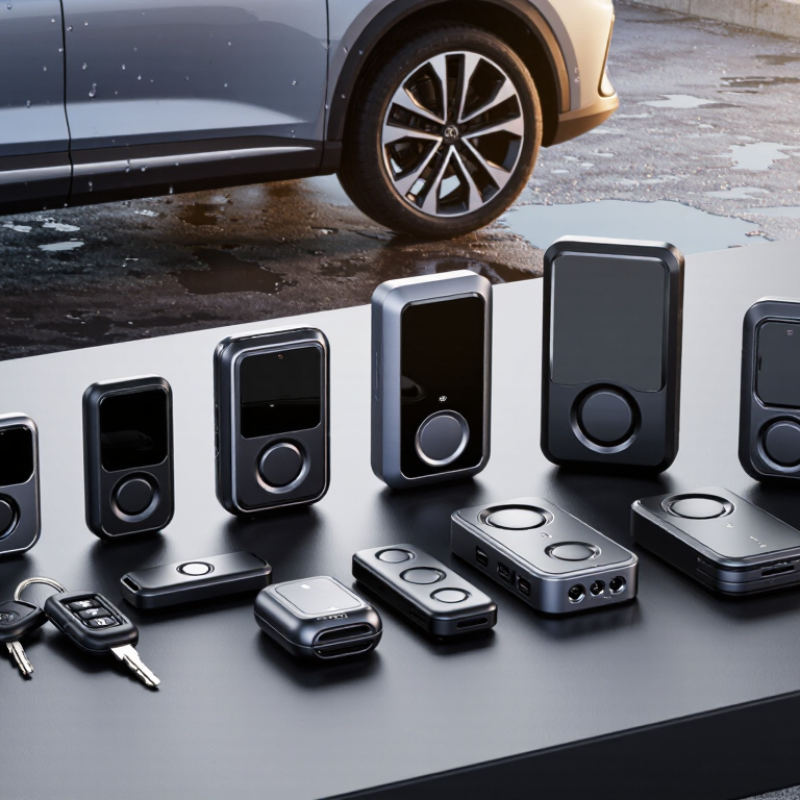
Top 10 Magnetic GPS Trackers for Global Buyers?
A magnetic GPS tracker combines a GNSS receiver, cellular modem, battery, and cloud platform. Its GNSS receiver calculates position from satellite signals, including GPS and other constellations. Under open-sky conditions, GPS.gov reports typical smartphone accuracy of about five meters. Performance drops near tall buildings, metal structures, and dense tree cover. Reflected signals can create convincing but incorrect locations. That assumption is too neat.
LTE coverage determines whether the tracker can upload its position. Satellites locate the device; cellular networks transmit the data. The GSMA Mobile Economy 2024 report estimated 4G coverage reached approximately 89% of the global population in 2023. Coverage remains uneven across rural regions, mountains, ports, and developing markets. Global buyers should verify roaming access, supported LTE bands, and local network shutdown plans. A strong GNSS fix cannot compensate for a missing cellular connection.
Core features deserve practical testing. Look for geofencing, motion alerts, tamper notifications, historical routes, low-battery warnings, and adjustable reporting intervals. Sleep modes may extend battery life, but a claimed sixty-day runtime often assumes infrequent updates. Magnetic mounting is convenient, yet it may fail on aluminum, dusty surfaces, or heavy vibration. Check the enclosure’s IP rating under IEC 60529, then test it in real weather. I would also compare reported positions against known locations, because small errors matter near entrances, loading areas, and underground parking.
Comparison of representative magnetic tracker profiles. Actual performance depends on satellite visibility, cellular availability, installation position, weather, battery condition, and service-plan support.
| Rank | Tracker Profile | Best-Fit Use Case | GNSS Support | Typical Open-Sky Accuracy | Cellular Technology | Global Coverage Considerations | Typical Battery Range | Magnetic Mounting | Core Features | Main Limitation |
|---|---|---|---|---|---|---|---|---|---|---|
| 1 | Long-Life LTE-M Magnetic Tracker | Vehicles, trailers, construction equipment, and fleet assets | GPS, Galileo, GLONASS, BeiDou | Approximately 2.5–5 m | LTE-M with 2G fallback where supported | Requires an LTE-M operator profile and compatible roaming agreements; availability varies by country | Approximately 3–12 months, depending on reporting interval and battery capacity | High-strength internal magnets; steel surface recommended | Geofencing, ignition or motion detection, scheduled reports, low-battery alerts, tamper alerts | LTE-M coverage is not available in every market |
| 2 | Compact LTE Cat 1 Magnetic Tracker | Commercial vehicles and mobile equipment requiring broad 4G support | GPS, Galileo, GLONASS, BeiDou | Approximately 3–8 m | LTE Cat 1 or Cat 1 bis | Usually offers wider 4G availability than LTE-M, but regional bands and roaming must be checked | Approximately 2–8 weeks for frequent reporting; longer with low-power schedules | Integrated magnetic base or enclosed magnetic plate | Live location, route history, overspeed alerts, movement alerts, web and mobile access | Higher power consumption than LTE-M or NB-IoT designs |
| 3 | NB-IoT Low-Power Magnetic Tracker | Stationary assets, storage containers, utility cabinets, and equipment | GPS, Galileo, GLONASS, BeiDou | Approximately 3–10 m | NB-IoT | Strongly dependent on local NB-IoT deployment; international roaming may be limited | Approximately 6–24 months with periodic location reports | Suitable for fixed steel surfaces | Scheduled positioning, long standby life, geofence alerts, battery-status reporting | Not ideal for continuous tracking or areas without NB-IoT service |
| 4 | Dual-Mode LTE-M and NB-IoT Tracker | International asset tracking with flexible network selection | GPS, Galileo, GLONASS, BeiDou | Approximately 2.5–8 m | LTE-M and NB-IoT; optional 2G fallback | More adaptable than a single-mode device, but supported bands and operator certification remain critical | Approximately 2–12 months, based on network mode and reporting frequency | Internal magnets with anti-slip housing | Automatic network selection, geofencing, motion sensing, scheduled tracking, tamper detection | More complex provisioning and potentially higher subscription cost |
| 5 | Water-Resistant Heavy-Duty Tracker | Outdoor machinery, trailers, agricultural equipment, and rental assets | GPS, Galileo, GLONASS, BeiDou | Approximately 3–8 m in open sky | LTE Cat 1, LTE-M, or regional 4G variant | Confirm LTE frequency-band compatibility before cross-border deployment | Approximately 1–6 months with periodic reporting | Multiple internal magnets with protective housing | Typical IP65–IP67 protection, vibration alerts, movement detection, route history | Large enclosure and reduced GNSS performance when covered by metal |
| 6 | Rechargeable Real-Time Magnetic Tracker | Short-term vehicle monitoring, logistics, and high-frequency tracking | GPS, Galileo, GLONASS, BeiDou | Approximately 2.5–5 m | 4G LTE or LTE Cat 1 | Performance depends on local 4G bands, SIM roaming, and network congestion | Approximately 3–20 days with frequent updates | Quick-release magnetic mount | Near-real-time updates, trip replay, speed alerts, ignition or movement events | Requires frequent charging under intensive tracking |
| 7 | Solar-Assisted Magnetic Tracker | Long-term outdoor monitoring of trailers and remote equipment | GPS, Galileo, GLONASS, BeiDou | Approximately 3–8 m | LTE-M, NB-IoT, or low-power 4G variant | Network coverage must be verified; solar charging varies with latitude, shade, and weather | Several months to potentially years with adequate sunlight and low reporting frequency | Magnetic base with optional fixed mounting points | Solar charging, low-battery protection, scheduled tracking, geofencing, motion wake-up | Limited charging performance in enclosed, shaded, or winter conditions |
| 8 | Covert Low-Profile Magnetic Tracker | Discreet fleet, rental-asset, and equipment monitoring | GPS, Galileo, GLONASS, BeiDou | Approximately 3–10 m | LTE-M, NB-IoT, or 4G LTE depending on region | Metal enclosures and concealed placement can reduce satellite reception and cellular performance | Approximately 1–6 months with motion-triggered reporting | Low-profile internal magnetic mount | Motion wake-up, tamper alerts, silent scheduled reports, low-power standby | Concealed placement may reduce accuracy and delay position updates |
| 9 | Multi-Constellation Precision Tracker | High-value assets where improved positioning availability is important | GPS, Galileo, GLONASS, BeiDou; multi-constellation reception | Approximately 1.5–5 m in favorable conditions | LTE-M or LTE Cat 1 | GNSS capability does not replace cellular service; location uploads still require network coverage | Approximately 2–12 weeks, depending on update frequency | Strong internal magnet with anti-slip surface | Improved satellite availability, route history, geofencing, adaptive reporting, sensor alerts | Urban canyons, tunnels, dense foliage, and metal obstruction can still reduce accuracy |
| 10 | Basic Budget Magnetic Tracker | Personal vehicles, basic asset recovery, and occasional monitoring | GPS with one or more additional GNSS constellations | Approximately 5–15 m in typical conditions | Regional 2G, LTE-M, NB-IoT, or 4G version | Requires careful checking of network shutdowns, supported bands, SIM activation, and roaming | Approximately 1–8 weeks, depending on battery and reporting schedule | Basic internal magnet | Location history, basic geofencing, movement alerts, battery notifications | Limited sensors, shorter battery life, and less consistent international compatibility |
Note: GNSS determines the device position from satellites, while LTE-M, NB-IoT, 4G, or 2G transfers that position to a server. A tracker can calculate a location without cellular coverage, but it generally cannot upload live data until a compatible network becomes available. GPS accuracy is typically best outdoors with a clear view of the sky.