
Yiwu’s wholesale markets can feel like a city within a city: rows of small shops, sample bags, price tags, and suppliers handling very different product categories. For overseas buyers, that choice is useful, but it can also make comparison difficult. A capable Sourcing Provider In Yiwu does more than arrange introductions. The provider should clarify specifications, check samples, confirm order details, and keep communication moving when a small change affects the final shipment.
This guide looks at ten sourcing providers serving Yiwu and the practical differences buyers may want to examine. The comparison considers service scope, local presence, communication, quality-control processes, and the kinds of clients each provider supports. No ranking can fit every buyer. A startup ordering a few cartons may need different support from an established retailer managing repeat orders. Details matter. Ask how inspections are documented, who handles supplier follow-up, and what fees are included before committing. China sourcing adviser Gary Huang’s guidance can be summed up in one line: verify the partner, not just the price. Treat that as a useful principle, not a substitute for checking each provider’s current services and references. The right choice is rarely the boldest promise; it is the partner whose process is clear, whose updates are specific, and whose limits are stated plainly. That takes work. It is worth doing before the first purchase order.
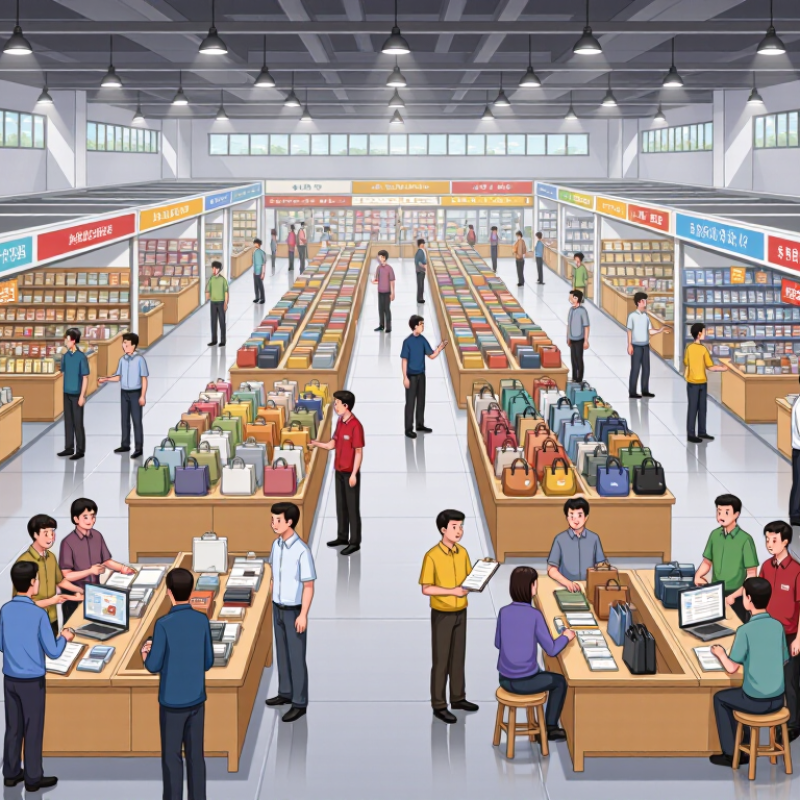
Yiwu sourcing providers turn a buyer’s product brief into workable supplier instructions. They compare quotations, check factory details, arrange samples, and follow production milestones. A clear brief matters. Specify materials, dimensions, packaging, and acceptable defects before ordering. Providers can also inspect cartons, combine goods from several suppliers, and coordinate shipping documents. Small details matter. A sample may look right but still differ from a full production run, so buyers should agree on inspection criteria in writing.
Shipping coordination is a major part of the service. UNCTAD’s Review of Maritime Transport 2024 reports that maritime shipping carries over 80% of world trade by volume. Providers can help plan consolidation, compare freight options, and flag delays, but they cannot control port congestion or changing schedules. The World Bank’s Logistics Performance Index 2023 covers 139 economies and assesses areas such as customs, tracking, and timeliness. These measures explain why shipment visibility matters. Still, a tracking update does not prove that goods meet specifications. Buyers should review inspection records and keep direct approval over samples and final product requirements. Sourcing support reduces daily coordination work; it does not remove the need for buyer oversight.
Choosing a sourcing provider in Yiwu requires more than comparing quoted fees. A useful assessment looks at product-category knowledge, supplier verification, communication habits, and order follow-up. Ask how the provider checks a workshop’s capacity, confirms materials, and records agreed specifications. Details matter. Request a sample inspection checklist or an anonymized order timeline, not just a polished introduction.
Local access can help, but it is not proof of quality. Strong providers explain what they can inspect in person and what must be confirmed through documents or independent testing. They should provide clear fee terms, realistic production schedules, and written updates when details change. Ask who handles defects, rework discussions, and shipping coordination. Then compare answers against the same sample order. Small tests reveal habits. A fast reply is useful, but consistent, specific replies are better.
Check references carefully and seek permission to contact past clients. Look for evidence of repeat orders, resolved problems, and accurate records, while respecting confidentiality. Also assess language clarity: misunderstandings over carton counts, colors, or labeling can cause costly delays. No scorecard catches everything. A provider may perform well on a small order and struggle at scale, so review capacity again before expanding. Some buyers overvalue low fees; vague pricing is a reason to pause, not an automatic bargain.
This is an evaluation framework, not a verified ranking of named providers. The criteria and weights below are suggested for comparing sourcing providers; scores should be assigned only after reviewing current, independent evidence.
| No. | Evaluation Criterion | Weight | What to Assess | Evidence to Request |
|---|---|---|---|---|
| 1 | Yiwu market and product-category knowledge | 15% | Ability to identify relevant suppliers and explain product options, specifications, and sourcing limitations. | Relevant sourcing examples, category experience, and a clear explanation of how suppliers are screened. |
| 2 | Supplier verification and due diligence | 14% | Whether the provider checks supplier identity, business details, production capability, and relevant compliance documents. | A description of verification steps, sample redacted records, and procedures for handling supplier risks. |
| 3 | Product quality control | 14% | The quality checks offered, their timing, inspection scope, and process for documenting defects or corrective actions. | Sample inspection checklist or report, defect-handling process, and any agreed inspection standard. |
| 4 | Transparent pricing and fee structure | 12% | Clarity on service fees, commissions, sample charges, inspection costs, and any supplier-side compensation. | Written quotation with itemized fees, payment terms, and disclosure of potential conflicts of interest. |
| 5 | Communication and project management | 10% | Responsiveness, language support, assigned contact person, progress updates, and escalation procedures. | A sample reporting format, stated response expectations, and a defined communication workflow. |
| 6 | Order consolidation and logistics coordination | 10% | Ability to coordinate goods from multiple suppliers, manage packing, and arrange shipment with clear responsibility boundaries. | A sample consolidation plan, packing process, shipping options, and explanation of who handles customs documentation. |
| 7 | Export and documentation support | 8% | Familiarity with commercial invoices, packing lists, shipping documents, and product-specific export requirements. | A list of documents supported and confirmation of which party is responsible for each document. |
| 8 | Customization and sampling capability | 7% | Support for sample requests, packaging or product customization, specification confirmation, and sample approval records. | A sample workflow covering costs, lead times, revision limits, and written approval before production. |
| 9 | Relevant track record and references | 6% | Demonstrated experience with comparable product types, order complexity, and destination markets. | Verifiable references where available, redacted case studies, and examples of completed project documentation. |
| 10 | Contract clarity and risk management | 4% | Clarity of service scope, payment milestones, confidentiality, liability limits, dispute handling, and cancellation terms. | A written service agreement and clearly stated procedures for delays, disputes, and order changes. |
| Total weighting | 100% | Suggested framework for comparing providers; verify all claims independently. | ||
Suggested scoring method: rate each criterion from 1 (weak evidence) to 5 (strong, verifiable evidence), multiply each rating by its weight, and compare the resulting weighted scores. The weights are editorial guidance, not independently measured market statistics.
These ten profiles describe common Yiwu sourcing-provider models, not a verified ranking. A general-merchandise coordinator compares prices across several market stalls and combines quotes into one sheet.
A small-order specialist helps buyers test modest quantities, though product choices may be narrower.
A category-focused agent knows details such as packaging sizes, material options, and seasonal availability.
A factory liaison checks whether a supplier makes goods directly or trades them. Ask for clear answers.
A quality-control provider can inspect samples, count cartons, and photograph defects before dispatch.
A consolidation specialist gathers purchases from multiple suppliers and checks carton labels against a packing list.
A market-visit guide supports in-person buyers with translation and supplier introductions; useful, but not a substitute for written records.
A product-development team coordinates samples and revisions. Keep approval notes. Small changes can get lost.
An order-management provider tracks deposits, production dates, and shipment documents in one place.
A remote-sourcing service handles searches through photos, video calls, and written specifications.
In practice, service quality depends on the person handling your order, not just the company’s advertised process. No provider is perfect. Before committing, request a sample quotation, a recent inspection example, and a breakdown of fees. I would also ask how delays or mismatched goods are recorded; that answer is easy to overlook.
When comparing ten sourcing providers in Yiwu, examine the work included in each service. Some arrange supplier introductions and sample collection; others also check product details, packaging, and shipment documents. Ask who will visit the market and how often you will receive updates. A clear scope matters.
Fees can be charged per day, per order, or as a percentage of purchases. There is no single standard rate, so request a written breakdown before paying. Check whether translation, sample delivery, product inspection, and local transport cost extra. A low quote may omit useful checks. Get the details.
Market expertise is more than knowing where stalls are located. Ask whether the provider understands your product category, can compare specifications, and can flag inconsistent stock or packaging. For example, a useful report might include item photos, carton dimensions, quoted quantities, and sample notes. Verify claims with references or a small trial order. No comparison is perfect. I would treat promised savings cautiously; unclear communication can cost time, even when the fee looks attractive.
Comparing Provider Services, Fees, and Market Expertise
There is no independently verified public dataset for ranking Yiwu sourcing providers by fees or expertise. This chart therefore does not rank or identify providers. It shows an illustrative calculation using a commonly quoted 5–10% sourcing commission range; actual fees depend on service scope, order size, and supplier arrangements.
A Yiwu sourcing provider should match your product, order size, and communication needs—not just offer the lowest fee. Ask how they verify factories, inspect samples, and report defects. Request a written quotation that separates product cost, inspection, packaging, and shipping. Details matter. For a small order, check whether the provider can combine goods from several suppliers and explain each consolidation charge. For a custom item, ask who approves materials and keeps the signed sample.
Use independent data as context, not as proof of one provider’s performance. The World Bank’s Logistics Performance Index 2023 ranked China 19th among 139 economies, offering a broad view of national logistics capacity. It cannot tell you whether an agent checks cartons carefully. UNCTAD’s Review of Maritime Transport 2023 reported that global containerized trade fell 3.7% in 2022. Shipping conditions can shift, so ask providers how they handle delays and revised freight quotes. Check the basics. Request a recent inspection report with clear photos, carton counts, and defect notes. Then test the process with a small order before scaling up. No checklist is perfect; even a reviewed sample may not reveal inconsistencies across a full production run.
880 W 9th Street
Upland, California 91786
884 W 9th Street
Upland, California 91786
886 W 9th Street
Upland, California 91786
884 W 9th Street
Upland, California 91786