
Demand for reliable screening equipment grows with mining, aggregates, and mineral processing. Grand View Research valued the global mining equipment market at about US$135.5 billion in 2023 and forecast a 5.2% compound annual growth rate from 2024 to 2030. This wider market figure is not a sales estimate for Triangular Screens. It does, however, show the scale of the industries that depend on efficient material separation.
A Triangular Screen may refer to a screen using triangular-profile wire, but product names and designs vary among suppliers. Buyers should compare the actual opening shape, wire material, panel dimensions, and operating conditions—not rely on a label alone. Small details matter. A few millimeters of aperture difference can affect throughput, separation, and wear in a particular application. World Mining Data 2024, published by Austria’s Federal Ministry of Finance, documents China’s substantial role in global mineral production, helping explain why the country has a broad base of screening and processing suppliers.
This guide examines Chinese manufacturers through practical criteria: product range, customization, quality controls, technical support, and export experience. Published specifications offer a useful starting point, but they cannot replace verified test results or reference checks. That gap deserves attention. Some suppliers disclose little about service life under real operating conditions, so any ranking should be treated as a shortlist—not a guarantee of performance.
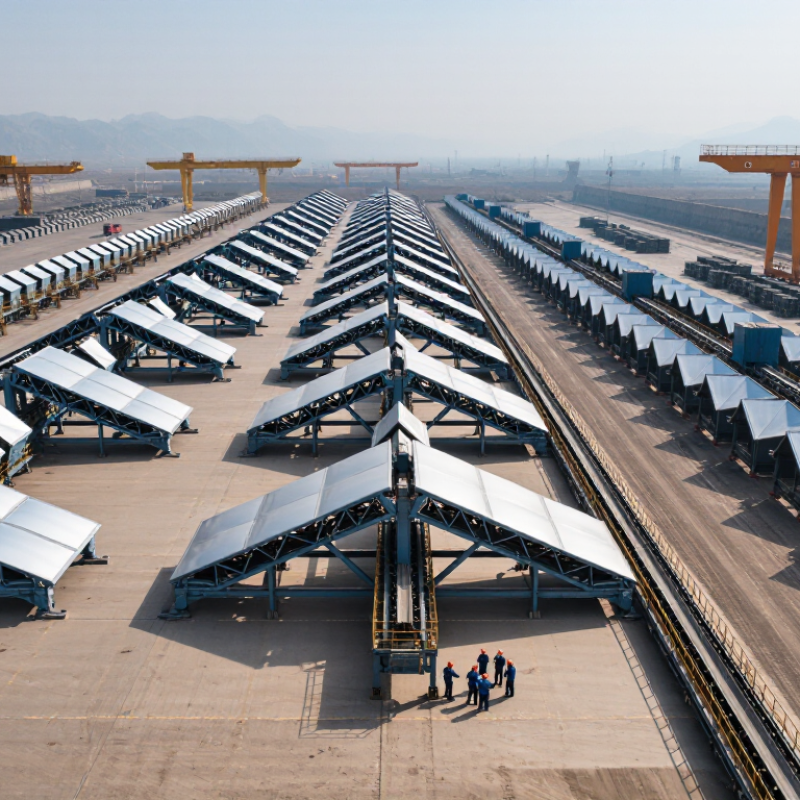
A triangular screen usually refers to a wedge-wire panel made with wires that have a triangular profile. The wider face forms the screening surface, while the narrower underside creates a slot that opens inward. This shape helps particles pass through instead of wedging tightly into the opening. The term can be confusing, though; some suppliers use it for different screen designs.
In operation, liquid or fine material moves across the panel. Smaller particles pass through the slots, while larger pieces remain on the surface and travel onward. In vibrating equipment, movement helps carry retained material toward the discharge end. Slot width, wire profile, and panel strength all affect performance. The detail matters. A slot that is too wide may let useful material escape, while a narrow slot can reduce flow or clog more easily.
When comparing Chinese manufacturers, ask how they control slot tolerances and inspect welds. Request drawings, material specifications, and test results for the intended feed. Screens also need cleaning and periodic checks for wear, especially around support rods. A triangular screen is not a perfect fix for every separation problem. Feed size varies, and real operating conditions can expose weaknesses that a sample panel does not show.
Triangular screens are commonly designed with a V-shaped wire profile and supporting rods. The narrow slot widens inward, helping reduce particle wedging and maintain flow. Engineers set the slot width, wire size, and support spacing around the material being screened. A drawing may look precise, yet actual feed conditions can vary.
In Chinese manufacturing facilities, production often begins with material selection and dimensional checks. Stainless steel grades are chosen to suit the expected moisture, temperature, and wear conditions. Forming equipment shapes the wire before it is positioned against longitudinal support rods. Resistance welding joins the contact points, while controlled spacing helps keep openings consistent along the panel. Small details matter. A slight shift in wire alignment can change the effective slot size.
Quality checks may include measuring openings at several points, inspecting welds, and checking panel flatness. For a custom order, buyers can request drawings and inspection records before production. Tests should reflect the intended use, not just a convenient factory setting. There is a trade-off: tighter openings may improve separation but reduce throughput or demand more frequent cleaning. No design is perfect for every feed, and that limitation deserves attention early.
| Comparison Dimension | Typical Industry Practice | What Buyers Should Check |
|---|---|---|
| Manufacturer landscape | Chinese producers supply wedge-wire screen products in formats such as flat panels, cylinders, baskets, and custom screen assemblies. Capabilities vary by factory and product type. | Compare documented production capabilities, relevant product samples, quality procedures, and experience with the required screen geometry rather than relying on an unverified ranking. |
| Screen profile | A wedge-wire screen commonly uses a shaped working wire with a narrow opening at the screening surface. The profile is joined to support rods or other specified structural supports. | Confirm the working-wire profile, support arrangement, opening direction, and whether the screen is designed for the required flow and loading conditions. |
| Slot opening | The slot is formed by the spacing between adjacent working wires. Opening size is selected according to the separation task and the material being screened or filtered. | Specify the nominal opening, permitted tolerance, measurement method, and whether the opening must be checked across the full panel or assembly. |
| Design inputs | Designs are typically developed from application details such as process medium, particle size, operating temperature, pressure, flow direction, and installation dimensions. | Provide operating conditions and interface drawings. Confirm that the supplier has reviewed the inputs before approving production drawings. |
| Materials | Stainless steel grades are commonly used for corrosion resistance and strength; other alloys or materials may be specified when service conditions require them. | Identify the required grade and applicable material documentation. Check compatibility with the process fluid, cleaning chemicals, temperature, and expected wear. |
| Manufacturing sequence | A typical route includes profile and support preparation, fixture setup, joining or welding, forming where required, trimming, finishing, and final inspection. The exact sequence depends on product geometry. | Ask how the supplier controls alignment, spacing, distortion, weld consistency, and dimensional accuracy for the specific screen design. |
| Product configuration | Panels and cylinders may be supplied with specified edges, frames, flanges, end rings, or mounting features to suit the equipment interface. | Check overall dimensions, connection details, orientation, reinforcement, and installation clearances against the approved drawing. |
| Quality inspection | Relevant checks can include dimensional inspection, slot-opening verification, visual examination of joints, material identification, and checks against the approved drawing. | Agree on inspection points, acceptance criteria, records, and any required inspection or test documentation before placing an order. |
| Common application areas | Wedge-wire screens are used in applications such as water intake and treatment, well and drainage systems, food processing, pulp and paper, and industrial separation, subject to suitable design and materials. | Match the screen design to the application, including particle retention, flow requirements, cleaning method, corrosion exposure, and mechanical loading. |
| Supplier evaluation | There is no single design or manufacturing specification that makes one producer suitable for every application. Product capability and quality controls should be assessed against the project requirements. | Request drawings, material details, inspection records, relevant references, lead-time information, and confirmation of the agreed technical specification. |
Leading Chinese triangular screen manufacturers should prove performance with application-specific testing, not catalogue figures alone. The USGS Mineral Commodity Summaries 2024 estimated China’s 2023 cement production at about 2.0 billion metric tons, illustrating the scale of demanding bulk-material operations. Buyers should request trial results using their own feed size, moisture level, and target throughput. Ask for screening efficiency, oversize contamination, and blinding observations. Small details matter. A test with dry, uniform material may not predict performance on damp, mixed feed.
Engineering depth is another key criterion. A capable supplier should explain how aperture shape, wire diameter, open area, and tension affect capacity and wear life. Request material certificates, dimensional inspection records, and a clear quality-control process. ISO certification can support confidence, but it does not replace product-specific evidence. Check whether spare panels, installation guidance, and technical support are realistically available after delivery. Export experience also matters: packaging, drawings, and communication should be clear. Some claims are hard to verify from a factory visit alone. Compare documented results, then confirm them against a monitored site trial.
Key criteria for evaluating manufacturers—without ranking or naming individual companies.
The percentages show an illustrative buyer-evaluation framework, not measured market data or a survey of Chinese manufacturers. Assess product consistency, material traceability, customization, quality control, and delivery support against your project requirements.
Notable triangular-screen manufacturers in China are better judged by engineering control than by catalogue size. Look for producers able to hold slot tolerances, maintain consistent triangular wire profiles, and document weld quality. Ask for inspection records and sample panels, not only a stated opening size. Small differences matter. A poorly matched slot can affect throughput and allow unwanted material to pass. For mining and water applications, also check corrosion resistance, panel support, and whether replacement screens fit existing equipment.
Market data gives useful context, but not a ranking of individual suppliers. Grand View Research’s Vibrating Screen Market Size, Share & Trends Analysis Report estimated the global market at about USD 1.9 billion in 2023 and projected 7.4% annual growth through 2030. This broad category includes equipment beyond triangular-profile screens, so it should not be treated as direct proof of demand for one screen type. Buyers can compare Chinese manufacturers using trial results, dimensional reports, and references from similar operating conditions. I would still verify performance under the actual feed material; a clean sample test may not predict a dusty, abrasive production line. That gap matters.
Triangular screens are used wherever materials must be separated by size or liquid must pass through a controlled opening. In mining and mineral processing, they can help classify crushed ore, wash aggregate, and remove fine particles from slurry. At a plant, operators may select an opening to suit the feed and check for blinding when wet material carries clay. Small details matter.
Quarries and sand-processing sites use these screens to sort stone, gravel, and sand into consistent fractions. Water and wastewater facilities may use wedge-shaped openings for screening debris or supporting filtration, depending on the equipment design. Food and beverage processors can also use suitably specified screens to separate solids from liquids; hygiene requirements and cleanability need careful review. Chemical plants and pulp operations may apply them in screening or drainage steps, but material compatibility should be confirmed before installation.
The right choice depends on more than the industry. Screen opening, wire profile, alloy, flow rate, and cleaning method all affect performance and service life. A panel that works well with dry gravel may clog quickly in sticky slurry. That is easy to overlook. Buyers should compare operating conditions and test representative material, since catalog dimensions alone cannot predict every result.
880 W 9th Street
Upland, California 91786
884 W 9th Street
Upland, California 91786
886 W 9th Street
Upland, California 91786
884 W 9th Street
Upland, California 91786