Top 10 Welded Metal Suppliers for Global Buyers
Choosing a Welded Metal supplier is not simply a matter of comparing prices. Global buyers must examine process control, material traceability, welding qualifications, and delivery consistency. A supplier may offer polished samples yet struggle with repeat production. That gap matters.
Dr. John C. Lippold, a respected welding metallurgy expert, has emphasized, “Welding is a manufacturing process, not merely a joining operation.” His point remains practical. A dependable supplier controls heat input, joint preparation, filler material, inspection, and documentation. Buyers should review certifications such as ISO 9001, AWS, EN, or equivalent standards. They should also request weld procedure specifications, inspection records, and clear information about base metals.
This guide presents the Top 10 Welded Metal Suppliers for Global Buyers. The selection considers production capacity, fabrication capabilities, export experience, quality systems, customization, and responsiveness. We also look at details that affect real projects, including crate protection, corrosion prevention, labeling, and replacement support. Small details often create expensive delays.
No ranking is perfect. Regional strengths, shipping conditions, and project complexity can change the result. A supplier with the lowest quotation may not deliver the lowest total cost. Conversely, a premium supplier may exceed the needs of a smaller order. Buyers should verify claims through factory audits, sample inspections, and recent customer references. Careful judgment is still necessary. This list is a starting point, not a substitute for technical due diligence.
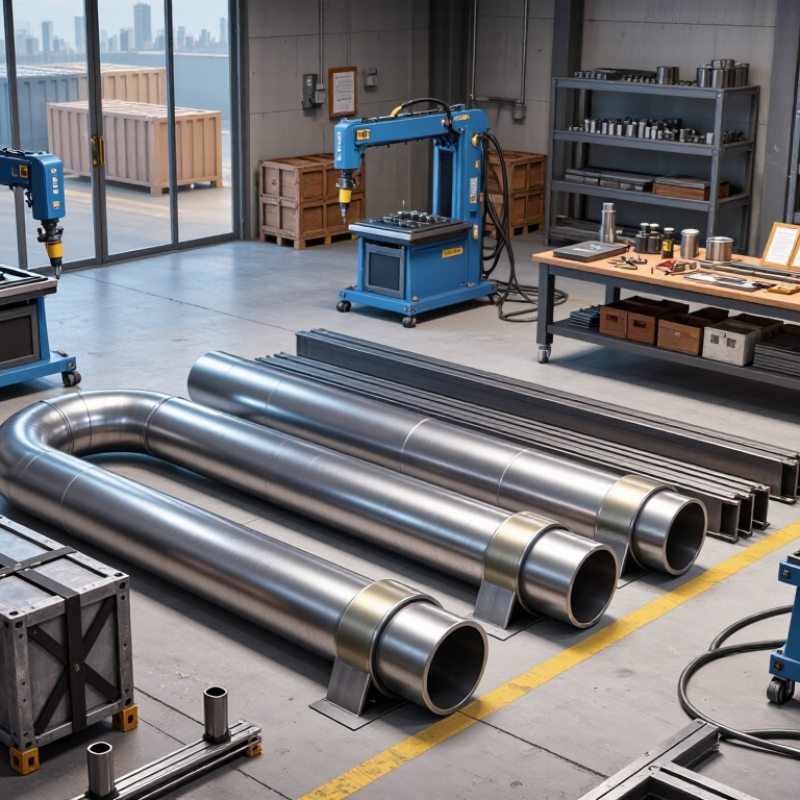
Definition and Scope of Welded Metal Suppliers
Welded metal suppliers are companies that join metal components through controlled welding processes and provide finished or semi-finished products. Their work may include steel frames, stainless-steel enclosures, industrial brackets, pipes, tanks, and custom assemblies. Some suppliers manufacture products in-house. Others coordinate cutting, welding, surface treatment, inspection, and delivery through approved partners.
The scope is broader than simply selling welded parts. A capable supplier should understand material grades, thickness limits, joint design, welding methods, and dimensional tolerances. They should also provide drawings, inspection records, material certificates, and traceability details. For global buyers, export packaging, loading plans, customs documents, and delivery schedules are equally important. Small gaps here can create expensive delays.
The boundary is not always clean. A metal distributor may offer basic welding, while a fabrication workshop may manage the entire production cycle. Buyers should ask who controls each stage. Photos are useful, but they cannot prove weld penetration or structural accuracy. Site audits, sample inspections, and independent testing provide stronger evidence. Even experienced purchasing teams can miss hidden variables, such as distortion after welding or corrosion caused by unsuitable surface preparation. Supplier evaluation should therefore compare real production capacity with project requirements, not only attractive prices or polished catalogues.
Top 10 Welded Metal Suppliers by Capabilities and Markets
Top 10 Welded Metal Suppliers for Global Buyers
The top 10 welded metal suppliers should be compared by capabilities, not popularity alone. A reliable supplier may handle carbon steel, stainless steel, aluminum, or mixed assemblies. Each material demands different heat control, filler selection, and inspection methods. Details matter.
Strong suppliers usually support laser cutting, CNC forming, robotic welding, and manual fabrication. They can provide welding procedure records, material certificates, dimensional reports, and traceability documents. These capabilities serve different markets, including construction equipment, industrial machinery, energy systems, transport, and agricultural products. A supplier focused on heavy frames may not suit thin, visible enclosures. Fit changes.
Market coverage also reveals operational strength. Suppliers serving North America and Europe often understand strict documentation, packaging, and delivery expectations. Those supplying Asia, the Middle East, or emerging manufacturing regions may offer shorter production routes or competitive labor costs. Buyers should verify export experience, port access, lead-time control, and after-sales communication. A polished website proves little. Sample parts, factory audits, and small pilot orders provide better evidence. Pricing can also mislead when inspection, tooling, coating, or freight costs appear later. Some comparisons remain imperfect because supplier data is not equally transparent. That limitation deserves attention before any final ranking.
This chart compares the ten largest steel-producing markets in 2023, using crude steel output as a transparent proxy for the manufacturing capacity and supply depth available to welded-metal buyers. The figures do not rank individual suppliers or brands.
Source: World Steel Association, 2023 crude steel production statistics. Unit: million metric tonnes.
How Global Buyers Can Select the Right Supplier
Selecting the right welded metal supplier requires more than comparing quoted prices. A serious evaluation begins with your drawing, material grade, weld size, tolerances, and expected production volume. Ask for recent inspection records, welder qualifications, and material traceability documents. Request a sample assembly, not only polished photographs. Inspect weld penetration, distortion, surface finish, and edge preparation. Small defects often become expensive problems during installation.
Among ten shortlisted suppliers, compare their process control and communication habits. Can they explain fixture design, welding sequence, and heat management clearly? A capable supplier should identify risks before production starts. Review their quality plan, non-destructive testing options, corrective-action process, and packing method. Visit the facility when possible. Look at actual workstations, measurement tools, storage conditions, and operator practices. A clean office proves little.
Total cost includes tooling, rework, freight, customs handling, and delayed delivery. Ask suppliers to separate these costs in writing. Confirm production capacity during your busiest period, not only in a quiet month. I have seen low bids fail because the supplier lacked suitable fixtures or consistent inspection. That experience makes one point clear: technical honesty matters more than impressive sales language. A perfect scorecard is impossible. Leave room for judgment. Choose the supplier that documents limits, responds quickly, and shows stable results across repeated batches.