Top Injection Molding Tooling Manufacturers Worldwide
Injection molding tooling sits behind familiar products: a phone housing, a medical-device enclosure, or a dashboard component. Yet a mold is more than a steel block with a cavity. Cooling channels, gate design, surface finish, and maintenance access can affect cycle time, part consistency, and production costs. Small details matter.
Grand View Research estimated the global injection-molded plastics market at USD 330.2 billion in 2023, with growth projected through 2030. This figure tracks molded plastics, not tooling sales. Still, it signals the scale of manufacturing that depends on reliable molds. The distinction matters when comparing suppliers: a large plastics market does not prove that every tooling manufacturer has equal capability.
This guide to top injection molding tooling manufacturers worldwide focuses on factors buyers can examine: engineering support, tool complexity, material selection, sampling processes, lead times, and after-sales service. ISO 20457:2018 provides tolerances and acceptance conditions for plastic molded parts, offering useful context for quality discussions. It does not replace a supplier audit or a project-specific agreement. Ask how a manufacturer handles mold trials, dimensional reports, spare inserts, and corrective changes. Request evidence, not only polished photos. A beautiful tool can still miss a production target. And supplier rankings can hide important limits: expertise in high-volume automotive molds may not translate to precision medical components. This overview is a starting point, not a final verdict.
Injection Molding Tooling: Core Components and the Global Supply Chain
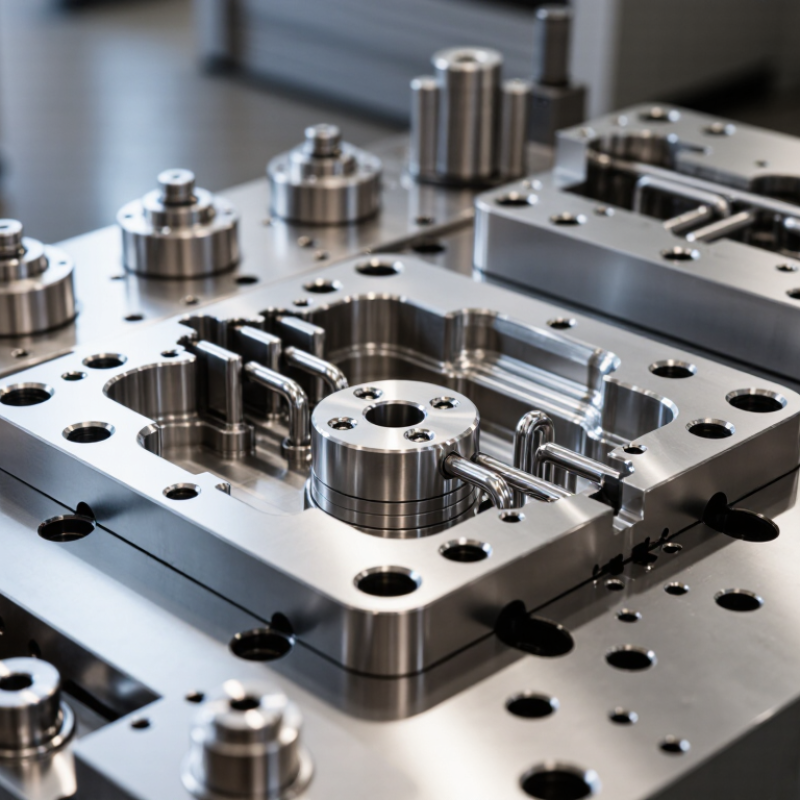
Injection molding tooling is more than a steel cavity. A production mold typically combines core and cavity inserts, a runner system, cooling channels, ejector pins, and a guiding structure. Each component affects cycle time, surface finish, and maintenance needs. Small design choices matter. A poorly balanced runner, for example, can leave uneven filling across a molded part.
The supply chain spans tool design, steel or aluminum sourcing, machining, heat treatment, polishing, assembly, and validation. Suppliers may work across borders, so material certificates, dimensional inspection, and clear revision records help prevent costly mismatches. Grand View Research estimated the global injection-molded plastics market at USD 330.49 billion in 2023, reflecting the scale of demand that tooling supports. This figure describes molded products, not tooling alone. Still, it highlights why reliable mold capacity matters. Long lead times remain a practical concern, and I have seen schedules become optimistic when late design changes reach the toolmaker.
Tips: Confirm resin, annual volume, and part tolerances before finalizing the mold layout. Ask how cooling channels and wear components will be inspected. Keep a spare-parts plan. It is easy to overlook.
Top Injection Molding Tooling Manufacturers Worldwide
Injection Molding Tooling: Core Components and the Global Supply Chain
Typical hardness ranges for commonly used mold steels illustrate one material consideration in tooling design and sourcing. Actual specifications vary by steel grade, heat treatment, and supplier.
How Tooling Is Made: Design, CNC Machining, EDM, and Validation
Top Injection Molding Tooling Manufacturers Worldwide
How Tooling Is Made: Design, CNC Machining, EDM, and Validation
A mold begins with the part, not the machine. Engineers review wall thickness, draft angles, resin shrinkage, and gate location before cutting steel. Small design choices matter: a misplaced gate can leave visible flow lines, while uneven cooling can warp a thin panel.
Grand View Research estimated the global injection-molded plastics market at USD 357.3 billion in 2023, underscoring the scale behind reliable tooling. The report’s market figure is context, not a measure of mold quality.
Then the tool takes shape.
CNC machining removes most material; EDM forms narrow ribs, sharp corners, and other details a cutter may not reach. Toolmakers check dimensions as they go, because a few microns can matter at a sealing face.
Close, but not done.
During validation, the mold runs with the intended resin and process settings. Teams inspect sample parts for dimensions, surface finish, flash, and short shots, then adjust cooling or venting when results drift. ISO 20457:2018 provides guidance on tolerances for molded plastic parts, but a standard cannot replace real trial data.
One uncomfortable truth: a clean first sample may still hide inconsistent results across longer runs.
Worldwide Tooling Manufacturers: Regional Hubs and Core Capabilities
Regional tooling hubs reflect local manufacturing demand, supplier depth, and engineering skills. Grand View Research’s 2024 Injection Molded Plastics Market report estimates the global market at USD 330.2 billion in 2023, with Asia Pacific holding 42.2% of revenue. This measures molded products, not mold-tool production. The distinction matters.
East Asian clusters are often associated with high-volume production, multi-cavity molds, and tight cycle-time control. In Europe, buyers commonly seek complex tooling, precise surface finishes, and close process validation. North American suppliers often support custom projects, smaller production runs, and direct engineering collaboration.
These are broad patterns, not guarantees. A regional label cannot confirm a toolmaker’s actual capability.
Ask for evidence: cavity layout, steel specification, cooling-channel design, dimensional reports, and sample-part data. For a mold with deep ribs, request details on venting and ejection, too. A factory visit can reveal toolroom organization and maintenance practices, but paperwork alone is not proof. The map is useful, yet imperfect. A supplier outside a famous hub may still offer better communication or faster revisions. Compare verified process controls, not just location or quoted lead time.
SPI Mold Classes 101–105: Tool-Life Ratings from 1,000,000+ to 500 Shots
SPI mold classes describe expected production life, not a guaranteed number of usable parts. Class 101 tooling is built for more than 1,000,000 shots and typically suits sustained, high-volume production. Class 102 covers up to 1,000,000 shots, while Class 103 is rated up to 500,000. Class 104 reaches up to 100,000 shots. Class 105 is intended for very limited use, typically fewer than 500 shots.
That matters.
The right class depends on more than the order quantity. Resin abrasiveness, part geometry, cycle conditions, and maintenance can all affect wear. A glass-filled resin may erode a gate sooner than an unfilled material, while thin ribs can demand careful venting and cooling. A polished cavity also needs protection during handling and cleaning.
These details are easy to overlook when comparing quotes.
For a short pilot run, a lower-class tool may be practical, but it can become a poor fit if demand grows. Conversely, specifying a high-life mold for uncertain demand may tie up budget unnecessarily.
Ask how the quoted tool life is defined, which components may need replacement, and what maintenance assumptions apply.
The class number is useful. It is not the whole plan.